
The Jews of Afghanistan and the old Kabul synagogue
A Jewish history far older than modern borders
Jewish communities lived for centuries in places that are now Afghanistan, especially in urban and trading centers such as Herat and Kabul. Their history is connected to wider Persian-speaking Jewish networks across Central Asia and Iran. Merchant families maintained commercial routes, religious learning and family links over long distances. Sources include travelers’ accounts, community memories, inscriptions and manuscripts. Some popular legends claim an unbroken biblical origin for every group; such stories should be treated as traditions unless independent historical evidence supports them.
Communal life and religious practice
Afghan Jews developed prayer customs and social institutions shaped by surrounding Persianate cultures. Small synagogues, cemeteries and private homes served as meeting places. Religious practices included Sabbath observance, Jewish festivals and Hebrew prayer, while everyday languages and dress reflected local circumstances. The degree of freedom varied between rulers and periods; Jewish families sometimes faced discriminatory restrictions and economic insecurity. The history of these communities is therefore neither a simple story of peaceful coexistence nor one of uninterrupted persecution.
Migration in the twentieth century
Political upheavals and the establishment of Israel accelerated emigration from Afghanistan. Many Afghan Jews settled in Israel, the United States and other countries. Communities in Jerusalem and elsewhere preserve family traditions through food, music and prayer. Migration meant that important religious objects and personal archives sometimes left the country, while old communal buildings lost their original functions. Oral testimonies are particularly valuable because the number of people who still remember Afghan Jewish neighborhoods firsthand has diminished.
The Kabul synagogue and the last resident
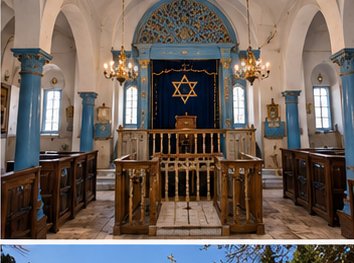
Zebulon Simintov became widely known for living at a synagogue in Kabul after most of the Jewish community had departed. In September 2021, during the upheaval surrounding the Taliban takeover, he left Afghanistan. Reports often called him the country’s “last Jew,” but such a phrase can oversimplify individual identity and residence. The synagogue building is historically important regardless of whether regular Jewish worship takes place there now; its condition and legal status should not be guessed without on-site reporting.
Preserving a dispersed heritage
The story of Afghan Jewry continues in diaspora communities whose children and grandchildren may never have lived in Kabul or Herat. Photographs, family documents, recipes and prayer melodies make it possible to reconstruct aspects of life that have largely disappeared from the country itself. A careful article should avoid treating an empty synagogue as proof that the people vanished: they migrated and rebuilt new lives, and their cultural memory remains active across borders.
Sources
October 2026