
Ajax–Maccabi Tel Aviv: the Amsterdam violence of November 2024
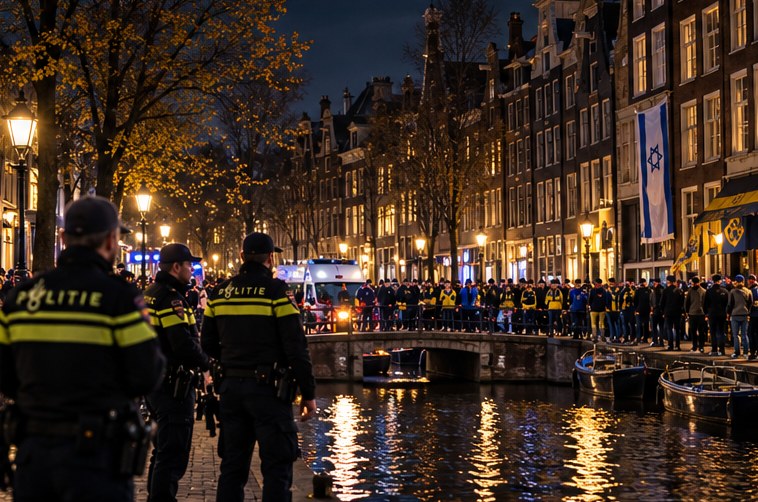
What happened around the Ajax–Maccabi Tel Aviv football match in Amsterdam, the attacks targeting people perceived as Jewish and the Dutch official inquiry.
A football match becomes a civic crisis
Ajax hosted Maccabi Tel Aviv in Amsterdam on 7 November 2024. The match took place amid intense political tension around the war in Gaza and protests connected with Israel. Violence occurred in different parts of the city before and after the game, drawing worldwide attention. The case illustrates how an international sporting event can become a focal point for wider conflict when football rivalries, politics, social media and group confrontations overlap.
The attacks and fear
The most disturbing part of the night was the targeting of people who were Jewish, Israeli or merely perceived as Jewish. Videos and witness accounts described threats, pursuits, harassment and beatings. The Dutch Inspectorate of Justice and Security later stated in its official 2025 report that such people were openly targeted in the night of 7–8 November. This distinction matters: a police account can acknowledge multiple confrontations without minimizing anti-Jewish violence directed at individuals because of their identity.
What the Dutch inquiry found
The Dutch inspectorate evaluated police and counterterrorism preparations, information exchange, leadership, cooperation and equipment. It concluded that groups on different sides had deliberately sought confrontation and that escalation became almost unavoidable. That does not mean all actions were equally serious or that blame can be assigned collectively to football supporters, migrants or entire religious communities. Careful reporting separates identifiable violent behavior from claims about broad populations.
Symbols, chanting and provocation
Some accounts described provocative conduct and offensive chanting by visiting supporters before the worst attacks. Such behavior can be examined and condemned on its own merits. It does not justify assaulting individuals later, still less targeting people because they appear Jewish. Equally, condemning antisemitic attacks should not require denying the political anger and arguments that were present around the match. Multiple facts can be true, and good reporting resists turning a complex sequence into one simple propaganda story.
How authorities and communities reacted
Dutch officials faced criticism about planning and crisis communication. Jewish organizations expressed fear, while politicians in Israel and Europe debated antisemitism, integration, policing and safety at sporting events. The aftermath also demonstrated the problem of viral footage: images without verified timestamps or locations can be recycled to support competing narratives. The official Dutch inspectorate report is therefore a valuable starting point, supplemented by careful independent reporting rather than only social media.
Lessons beyond football
The Ajax–Maccabi episode is a story about civic protection. Spectators should be able to attend a match without being hunted in the streets because of identity, nationality or assumed religion. Cities also need proportional policing, credible intelligence, transparent investigations and protection of peaceful protest. The wider lesson is that criticism of a government, solidarity with civilians in war and strong feelings about football must never become a license for violence against ordinary people.