
Bat Yam: the Mediterranean city south of Tel Aviv
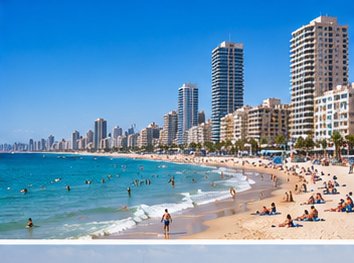
A modern city beside the sea
Bat Yam lies immediately south of Tel Aviv–Jaffa on Israel’s Mediterranean coastline. Its name literally means “daughter of the sea,” an apt description of a city whose beaches and promenade have shaped its identity. Contrary to a common misconception, it is not a biblical city founded in antiquity under that name: its modern history began in the twentieth century. The municipality is part of the dense Gush Dan metropolitan region, where residents often travel across administrative boundaries for work, shopping and education.
From a small settlement to an urban center
The settlement was founded during the British Mandate period and developed rapidly after the establishment of Israel in 1948. Waves of immigrants, including families from Europe, North Africa and the former Soviet Union, transformed its population and neighborhoods. Apartment blocks, schools, community centers and local businesses grew alongside roads toward Tel Aviv, Holon and Rishon LeZion. Urban renewal has become important because many older buildings need upgrading while land near the coast attracts intensive redevelopment proposals.
Beaches, culture and daily life
Bat Yam has a long stretch of public beach, popular promenades and spaces for walking, swimming and watching sunsets. Like other Israeli coastal cities, it must balance recreation, accessibility, environmental protection and development. Cultural programming has included performance, street art and local festivals, while residents make use of museums, sports facilities and libraries. The city is not simply an extension of Tel Aviv: it has its own elected municipal government, neighborhood networks and immigrant histories.
Transport and the wider metropolis
Public transport connects Bat Yam with surrounding cities, and the Tel Aviv metropolitan light-rail network has reshaped travel patterns. Traffic, parking and housing costs are major urban issues, especially where older residential districts meet newer construction. For visitors the beach can be a destination in its own right, but it is also worth observing everyday city life away from the shoreline. Local markets and cafés reveal a different atmosphere from the central Tel Aviv waterfront.
A balanced way to describe Bat Yam
Population figures and neighborhood boundaries should be checked against the Israel Central Bureau of Statistics or city data for the relevant year. In tourist material, Bat Yam is sometimes romanticized as a cheap alternative to Tel Aviv; prices and accessibility vary significantly across districts. The useful story is one of a contemporary immigrant city that keeps adapting to the metropolitan economy while protecting access to the sea, open spaces and community life.
Sources
October 2026