
Chabad-Lubavitch and 770 Eastern Parkway in Brooklyn
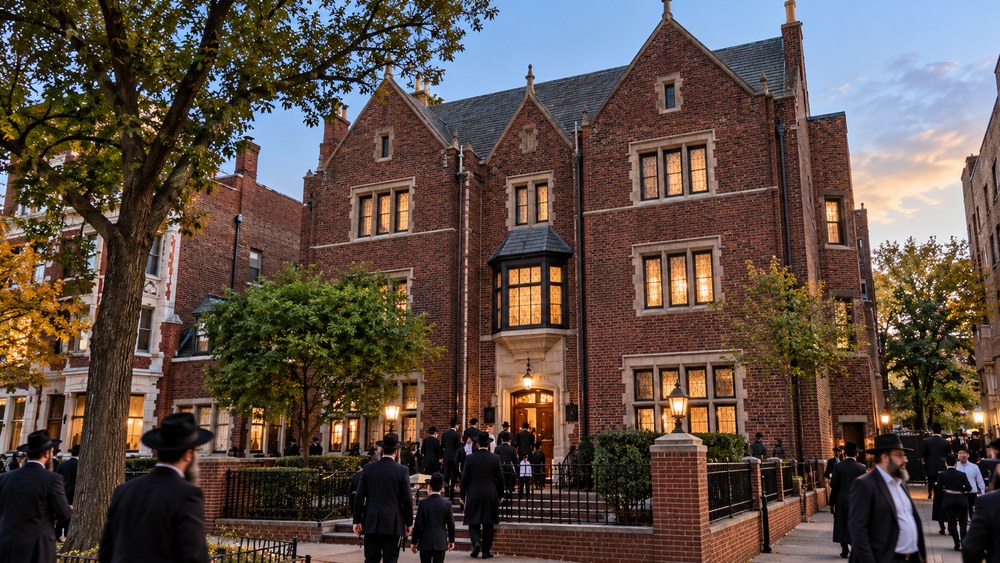
The headquarters of Chabad-Lubavitch, its history, worldwide outreach and links with the Rebbe. The following article distinguishes documentary facts, religious beliefs, historical memories and modern public practices.
A building with a global name
The number 770 is more than a Brooklyn street address. The building at 770 Eastern Parkway in Crown Heights became the symbolic headquarters of Chabad-Lubavitch, one of the best-known movements within Hasidic Judaism. The historic red-brick house has been copied in architectural form elsewhere, and its address appears on books, signs and community material around the world.
How Chabad came to Brooklyn
The sixth Lubavitcher Rebbe, Rabbi Yosef Yitzchak Schneersohn, found refuge in the United States during the Second World War. In 1940 the movement acquired the property at 770 Eastern Parkway. It became a place for worship, study, meetings and the rebuilding of a religious network after Europe’s destruction. A local house soon acquired global importance.
The seventh Rebbe and outreach
Rabbi Menachem Mendel Schneerson, the seventh Lubavitcher Rebbe, later led Chabad from the same neighborhood. His emphasis on education, mitzvot and outreach expanded the movement’s network of emissaries and institutions. Visitors associated 770 with public talks, prayer gatherings and the Rebbe’s leadership. Chabad centers were established in cities and remote places around the world.
A living site, not simply a monument
770 remains an active religious setting and community address. People come for services, study and to see a place important to Chabad memory. Different Chabad communities have varied practices and views, and the movement’s history should not be reduced to an architectural symbol. The building is one part of a network of schools, social services and Jewish centers.
770 is not the tomb
A frequent confusion concerns the Rebbe’s grave. The headquarters building is in Brooklyn, while the gravesite known as the Ohel is located in Queens. Visitors can travel between them, but they are different places serving different religious and communal purposes. The Rebbe died in 1994, and his grave became an important place of pilgrimage.
Why the address matters
The story of 770 illustrates how a small building can become a symbol of international Jewish identity. Its significance comes from religious leadership, the memory of exile, shared customs and continuing education. For readers, the best approach is to connect the historic house to the movement’s living institutions and distinguish it clearly from other branches of Hasidism.