
The Dreyfus affair: trials, antisemitism and the struggle for justice
2026
The Dreyfus affair: trials, antisemitism and the struggle for justice
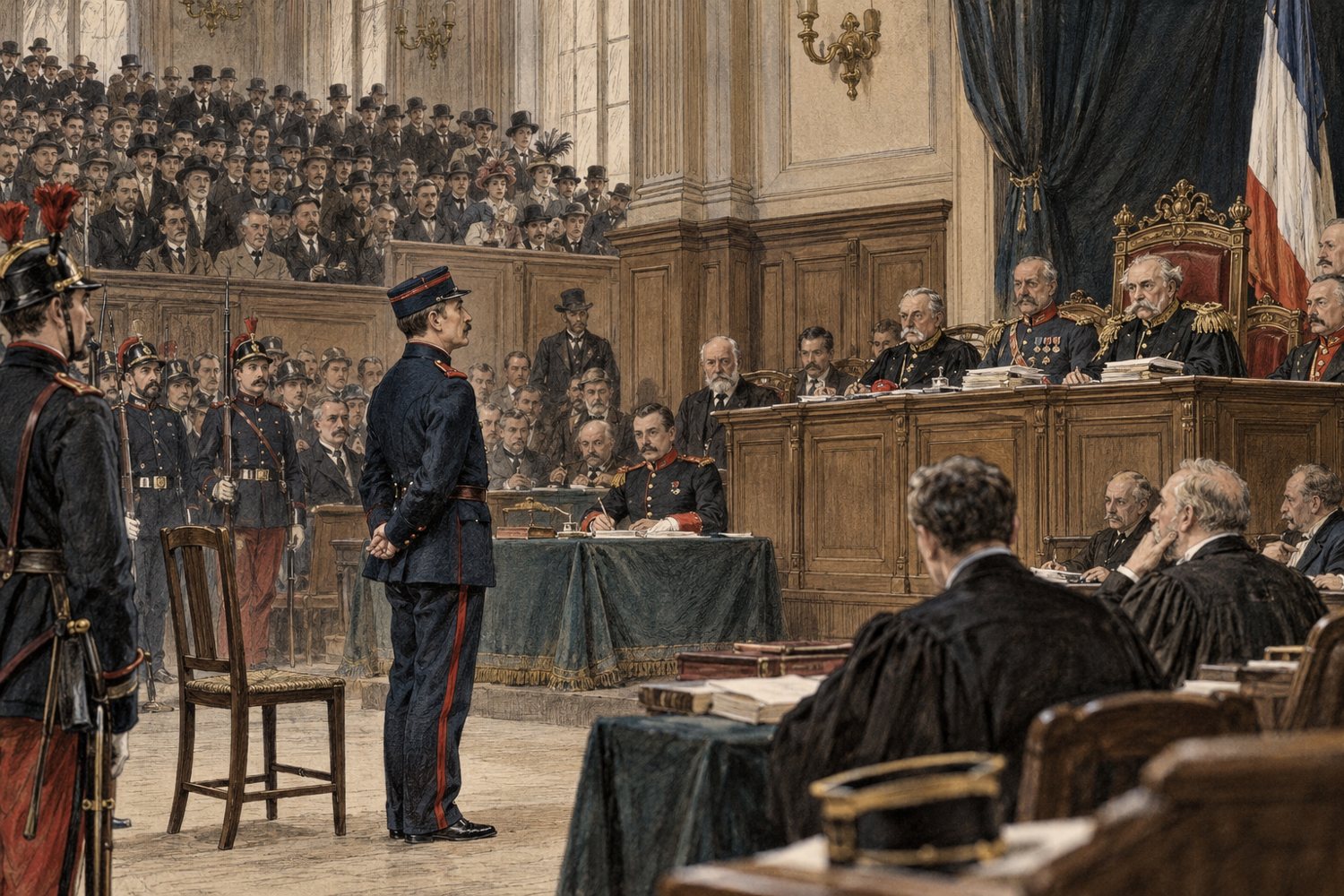
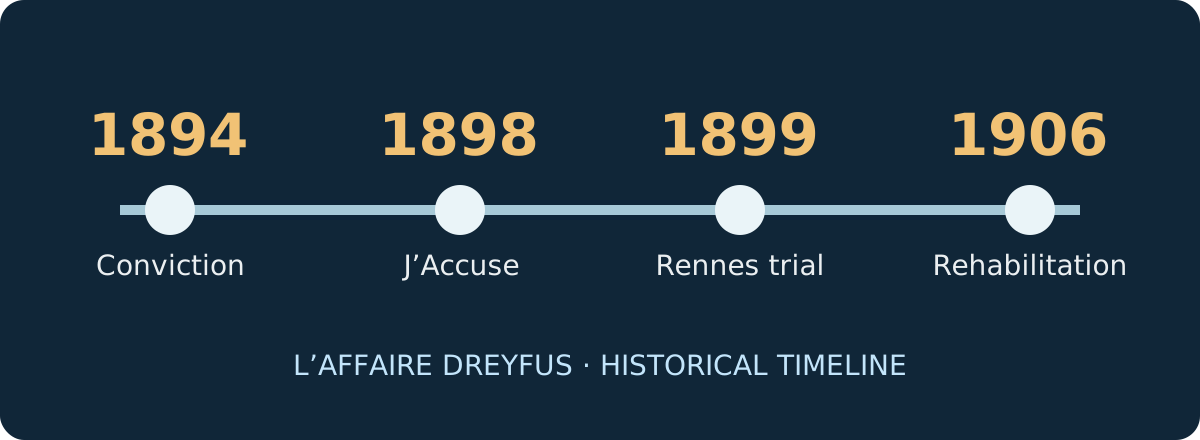
In 1894, French army captain Alfred Dreyfus, an officer of Jewish origin from Alsace, was accused of passing military secrets to Germany. A court-martial convicted him following flawed proceedings, including a secret dossier shown to judges but not properly available to his defense. His public degradation took place in January 1895; he was deported to Devil’s Island in French Guiana, where he remained under harsh conditions.
Context
Evidence later pointed toward another officer, Ferdinand Walsin Esterhazy. Major Georges Picquart helped expose contradictions in the case, but the army leadership initially protected the conviction. The affair divided French society between those demanding a review of the evidence and defenders of the military verdict. Antisemitic newspapers and political movements exploited the case, portraying Dreyfus’s Jewish background as proof of disloyalty.
Context
In January 1898 the writer Émile Zola published his open letter “J’Accuse…!” and accused senior authorities of a miscarriage of justice. Zola faced prosecution, but the public debate spread far beyond the courtroom. The 1899 retrial at Rennes found Dreyfus guilty again despite serious doubts and mitigating findings. President Émile Loubet granted a pardon; accepting a pardon did not mean that Dreyfus admitted guilt.
Context
The Court of Cassation finally annulled the verdict in 1906 without ordering a third court-martial. Dreyfus was restored to the army, appointed a chevalier of the Legion of Honour, and later served during the First World War. The episode became a landmark in debates about republican justice, press freedom, military accountability, nationalism and antisemitism.
Context
Historical images show different parts of the affair: the degrading ceremony of 1895, courtroom drawings from Rennes in 1899, contemporary newspapers and later photographs. Drawings may contain the artist’s interpretation and should not be confused with photographs. The original trial files and parliamentary records remain especially valuable sources.
Sources and references
www.assemblee-nationale.fr — l affaire dreyfus