
Operation Eichmann: capture in Argentina and trial in Jerusalem
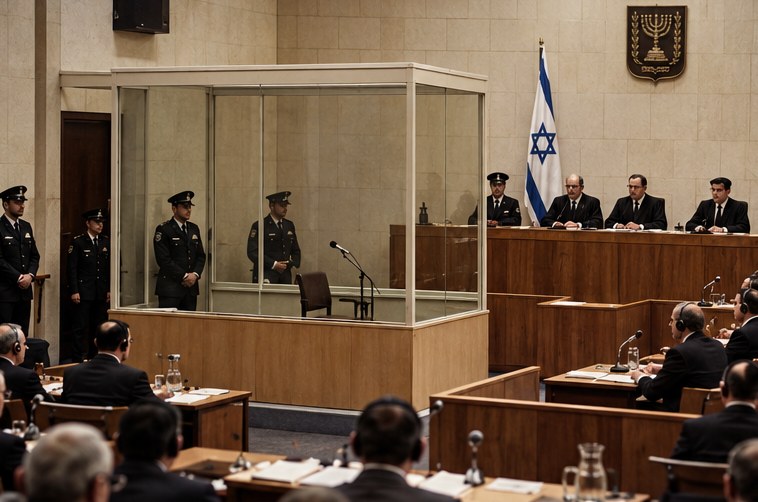
How Israeli agents captured Adolf Eichmann in Buenos Aires in 1960, the international legal dispute and the 1961 trial.
A Nazi fugitive in South America
Adolf Eichmann had helped organize the deportation of European Jews during the Holocaust. After Germany’s defeat he escaped, lived under an assumed identity and eventually settled in Argentina as Ricardo Klement. Locating him required persistence over many years. Survivors, relatives, German justice officials and intelligence services all played roles in tracing his whereabouts. The story is not simply a spectacular spy operation; it is also a story of witnesses and investigators who refused to allow a major organizer of mass murder to disappear into ordinary life.
The clues that made the operation possible
One central figure was the West German prosecutor Fritz Bauer, who passed information to the Israelis because he feared that official channels might leak it. Lothar Hermann and his daughter Sylvia also provided crucial clues. Israeli intelligence evaluated reports, identified the suspect’s routine and planned a clandestine operation in the Buenos Aires area. On 11 May 1960, Mossad officers seized Eichmann near his home. The operation was carried out without the consent of the Argentine authorities and therefore immediately raised a serious issue of national sovereignty.
Removal from Argentina
After the capture, the agents held Eichmann in a secure location, established his identity and eventually transported him to Israel on an El Al flight. Prime Minister David Ben-Gurion announced to the Knesset on 23 May that Eichmann was in Israeli custody. Argentina protested the breach of its sovereignty, and the dispute reached the United Nations. The political argument was real, even though Eichmann was accused of exceptional crimes. The operation therefore exposed a tension between the pursuit of justice for genocide and the international rules governing states.
A courtroom that the world watched
Eichmann’s trial began in Jerusalem in April 1961. The prosecution did more than present administrative documents; it also allowed Holocaust survivors to describe persecution, deportation and murder in their own voices. For many Israelis and international viewers, the testimony changed how the Holocaust was publicly discussed. The proceedings helped move survivor experience from private pain into a global historical record. Eichmann was convicted of crimes against the Jewish people and crimes against humanity and sentenced to death.
Justice, memory and criticism
The sentence was upheld on appeal, and Eichmann was executed in 1962. The trial became a major event in modern legal history. Scholars, including Hannah Arendt, argued over the meaning of bureaucratic evil and the responsibility of individual officials within murderous systems. Other historians emphasized Eichmann’s ideological commitment and active initiative. Those debates should not distract from the evidence of his involvement in deportations; instead, they show how difficult it can be to explain deliberate atrocity without simplifying either its perpetrators or its victims.
What remains of the case
Today the operation can be studied through Yad Vashem, the United States Holocaust Memorial Museum, court documents and memoirs. It is remembered as an intelligence success, a diplomatic controversy, a landmark trial and a turning point in public Holocaust remembrance. The most important lesson is not the drama of a secret arrest. It is the long struggle to collect evidence, hear survivors and subject a senior perpetrator to legal judgment when too many others had escaped accountability.