Mahatma Gandhi, the Jewish World, the Holocaust and Zionism
October 2026
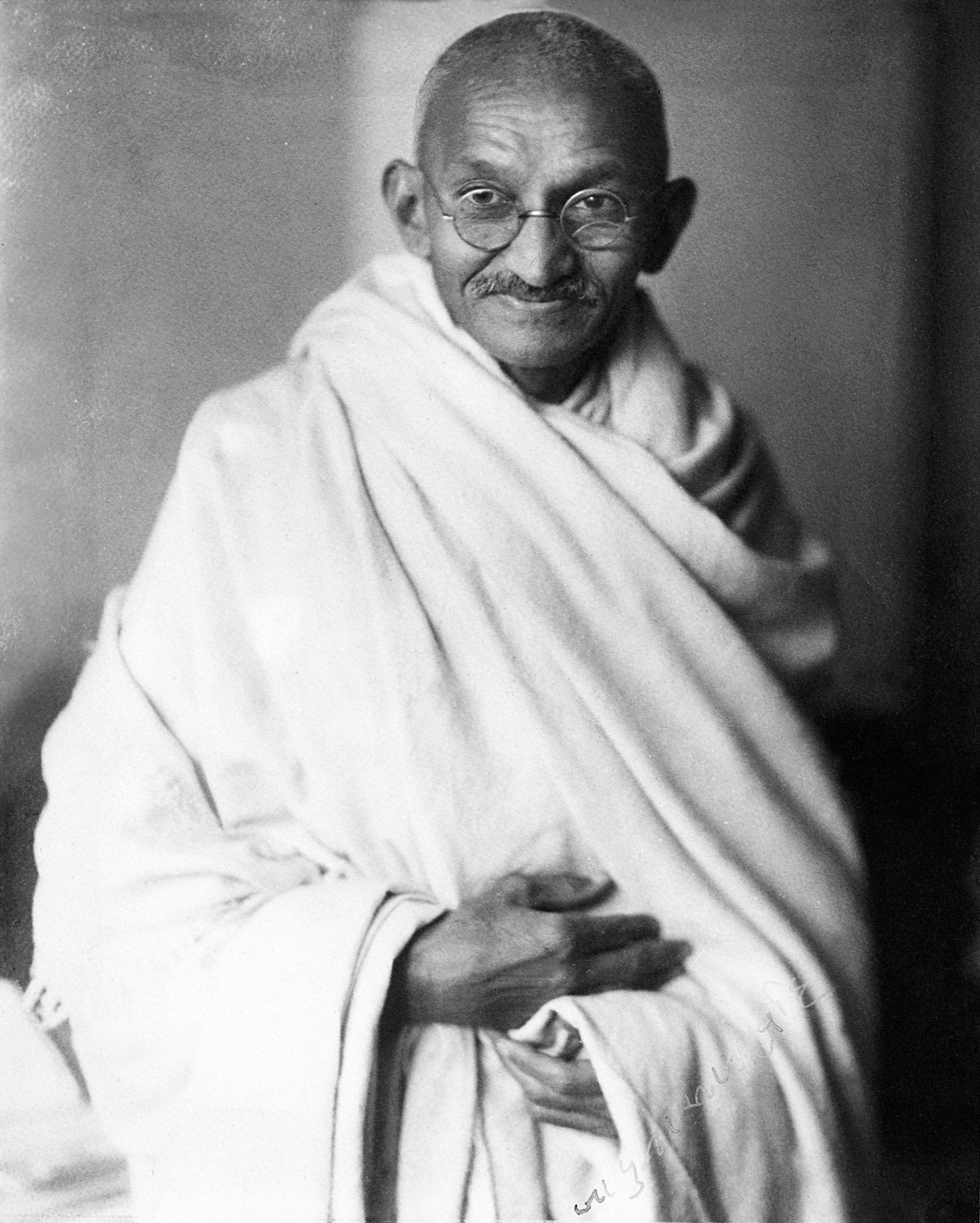
Mahatma Gandhi is remembered as a major leader of India's independence movement and an advocate of nonviolent resistance. His relationship with Jewish people and Jewish national aspirations, however, cannot be reduced to a simple statement of support or opposition. Some of his closest associates in South Africa were Jews. He publicly condemned anti-Jewish persecution in Nazi Germany. At the same time, he opposed the political means by which Zionists sought a national home in British Mandatory Palestine and urged persecuted Jews to adopt a form of resistance that many of his contemporaries regarded as impossible under Nazi rule.
Gandhi developed his methods of civil resistance in South Africa, where Indian immigrants faced discriminatory restrictions. The architect Hermann Kallenbach, born into a Jewish family in East Prussia, became an exceptionally close friend and collaborator. Kallenbach made land available for Tolstoy Farm in 1910, a communal settlement supporting families of imprisoned resisters. The Jewish lawyer and journalist Henry S. L. Polak likewise worked with Gandhi, while the young Jewish secretary Sonja Schlesin helped organize the movement. These were substantial personal and political relationships, not merely occasional encounters.
South African Jewish communities were not unanimous about Gandhi's campaign. The National Library of Israel has emphasized that some Jewish leaders sought exemptions from restrictions on European immigration rather than joining Indians in a shared struggle. Gandhi admired individual Jewish allies and learned about the diversity of Jewish communities, including Jews with roots in Iraq and India. Yet a friendship with several Jews did not mean that he understood every dimension of Jewish collective identity or the history of Zionism.
The rise of the Nazi regime forced Gandhi to confront questions far removed from the circumstances in which satyagraha had developed. On 26 November 1938, shortly after the November pogroms in Germany and Austria, his journal Harijan published an essay titled 'The Jews'. Gandhi expressed sympathy for Jews and explicitly condemned their persecution. He compared Jewish exclusion in Christian societies with the oppression of communities treated as 'untouchable' in India. He insisted that a Jew born in Germany had a right to regard Germany as home and to resist discriminatory expulsion.
Gandhi nevertheless urged German Jews to face persecution through organized nonviolence. The recommendation reflected his moral conviction that refusal to cooperate with injustice could expose the oppressor's cruelty. Its weakness was that Nazi genocide did not depend on the ordinary legitimacy or public consent that Gandhi had challenged under colonialism. A dictatorship committed to racial extermination could murder unarmed people without changing its policy. Jewish critics stressed that a population denied freedom, organization and protection could not be expected to apply the same methods as a mass movement operating under very different conditions.
The word Holocaust refers to the Nazi genocide of approximately six million Jews during the Second World War. Gandhi's 1938 essay was published before the full machinery of that genocide had developed. His later comments, even after the scale of the catastrophe became known, continued to make severe demands of Jewish nonviolence. This remains one of the most controversial aspects of his moral and political legacy. It is possible to recognize his principled hatred of antisemitism while also identifying the grave limitations of his proposed response.
Gandhi's view of Palestine was similarly complicated. He recognized the religious and historical Jewish connection to the land, yet objected to the idea that European persecution entitled Jews to establish a national home through imperial intervention against the wishes of the Arab population. He argued that Jews should receive equal rights and security in the countries in which they lived. His position challenged Zionism's central claim that the failure of such protection demonstrated a need for Jewish political self-determination.
Hermann Kallenbach eventually became a committed Zionist. In 1937 he visited Gandhi in India, hoping to win greater understanding for Zionist aspirations. Jewish visitors and correspondents continued discussions with Gandhi. The Indian Jewish journalist A. E. Shohet explained why centuries of Jewish vulnerability differed from Gandhi's analogy with caste discrimination. Those exchanges show that his position was argued over within a real network of friendships, not simply announced to an absent audience.
On 1 September 1939, the day Germany invaded Poland, Gandhi wrote a Jewish New Year greeting expressing hope for peace. The National Library of Israel preserves the document. That gesture reflects genuine human sympathy, even though agreement about Palestine or the use of force remained elusive. The tension between personal concern and political disagreement is important to any balanced understanding.
Gandhi also wrote to Adolf Hitler in July 1939 to appeal against war. The salutation and conciliatory form of the letter have generated debate, but the historical question is more precise: Gandhi believed moral persuasion could reach even a dictator, while his critics regarded that belief as a dangerous misreading of the Nazi regime. His correspondence does not erase his denunciation of anti-Jewish persecution, nor does that denunciation resolve the inadequacy of his advice to those facing annihilation.
Jewish reactions ranged from friendship and admiration for Gandhian ethics to pointed opposition. Zionist thinkers and activists argued that the urgency of Jewish refuge and self-defense had been misunderstood. Historians must distinguish the immediate debate of the 1930s, knowledge available during the war, and interpretations formed after the Holocaust. Quotes about Gandhi should therefore be dated and placed in context instead of treated as timeless slogans.
Today Gandhi's relationship with the Jewish world raises enduring questions about ethical ideals and political responsibility. Can nonviolence protect a minority when an enemy seeks its complete destruction? How should national self-determination be balanced with the rights of another population? Can respectful personal relationships survive fundamental political disagreement? Gandhi's biography supplies no simple answer. It does provide a record of sincere solidarity, profound disagreement and moral choices made under extreme historical pressure.