
Hebron: the biblical city and the modern city
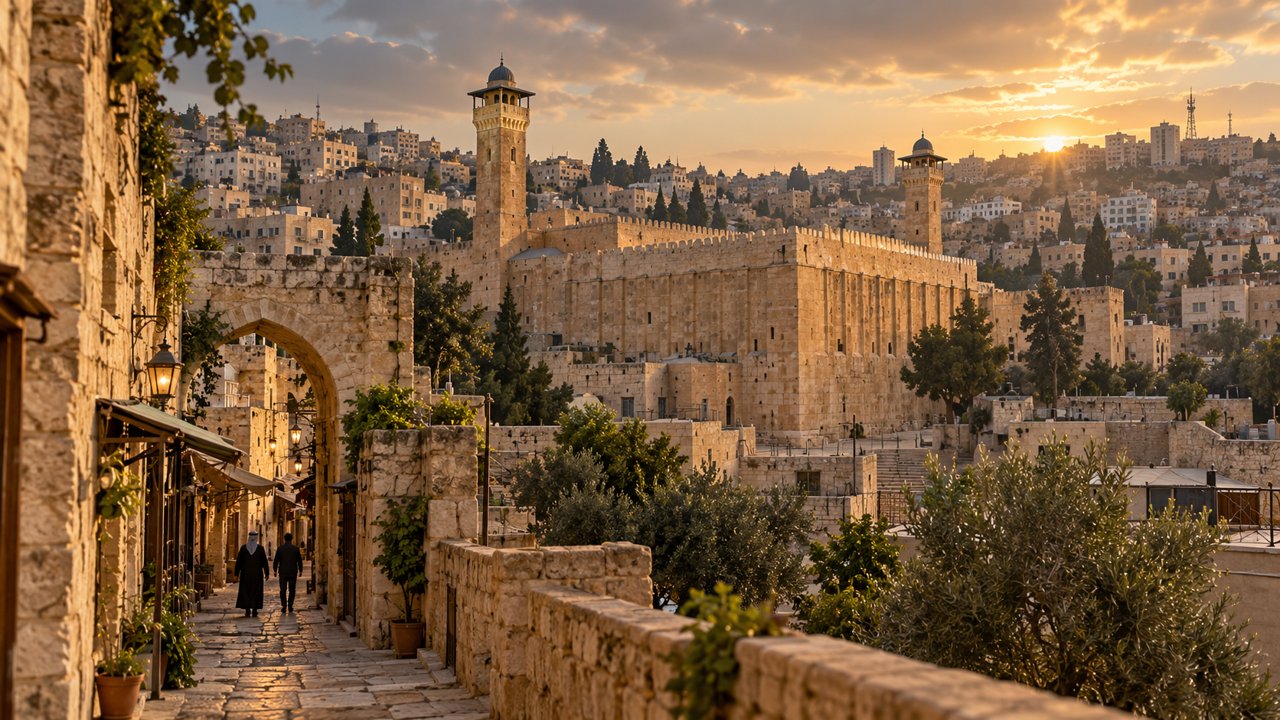
A long article about Hebron and Al-Khalil: Abraham, the Cave of the Patriarchs, the old city, the 1929 violence, the divided city and daily life in the modern era.
A city of deep memory
Hebron is one of the oldest continuously inhabited cities in the region and one of the most emotionally charged. In Jewish memory it is the city where Abraham purchased the burial cave for Sarah, making the site of Machpelah one of the foundational places of biblical history. In Islamic tradition the city is Al-Khalil, the city of the friend of God, Abraham/Ibrahim. Christians have also long associated the city with the patriarchal narratives. This layered sanctity is one reason Hebron has never been merely local: it belongs at once to religion, memory, pilgrimage and politics.
The biblical and historical Hebron
In the Hebrew Bible, Hebron appears repeatedly: Abraham settles there, David is first anointed king there, and the surrounding hill country becomes part of the story of Judah. Archaeology and later historical sources show that the area remained important through the Second Temple, Byzantine, early Islamic, Crusader, Mamluk and Ottoman periods. The monumental enclosure above the traditional burial place of the patriarchs and matriarchs is among the best known surviving sacred structures in the land. The old city, with its stone markets, courtyards and lanes, still carries traces of these long centuries.
The modern city
Modern Hebron is also a living urban center with schools, workshops, trade, family networks and very different narratives of belonging. The old city and the Tomb of the Patriarchs/Ibrahimi Mosque stand at the heart of a city that is largely Palestinian in population, while a smaller Jewish community maintains a renewed presence in specific areas. The events of 1929, when dozens of Jews were murdered in Hebron, remain central to modern Jewish memory of the city. After 1967, Jewish presence in and around Hebron was re-established, and after the Hebron Protocol of 1997 the city was effectively divided into H1 and H2 zones under different administrative arrangements.
Why Hebron remains sensitive
To write about Hebron responsibly is to accept that the city carries holiness, grief, tourism, commerce and conflict all at once. UNESCO lists Hebron/Al-Khalil Old Town as a World Heritage site. Pilgrims and tourists come for the sacred past; residents live with checkpoints, security concerns, political disagreement and competing historical claims. For many readers, Hebron is one of the clearest examples of how biblical geography still shapes the contemporary Middle East. Its stones are ancient, but its debates are unmistakably modern.
Selected links and institutions
- UNESCO – Hebron/Al-Khalil Old Town
- The Jewish Community of Hebron – history
- Wikipedia – Hebron
- Wikipedia – Cave of the Patriarchs
Note
Because Hebron is a contested city, readers benefit from consulting more than one institutional source and comparing religious, historical and international descriptions.