
Ilan Ramon, STS-107 and the Columbia disaster
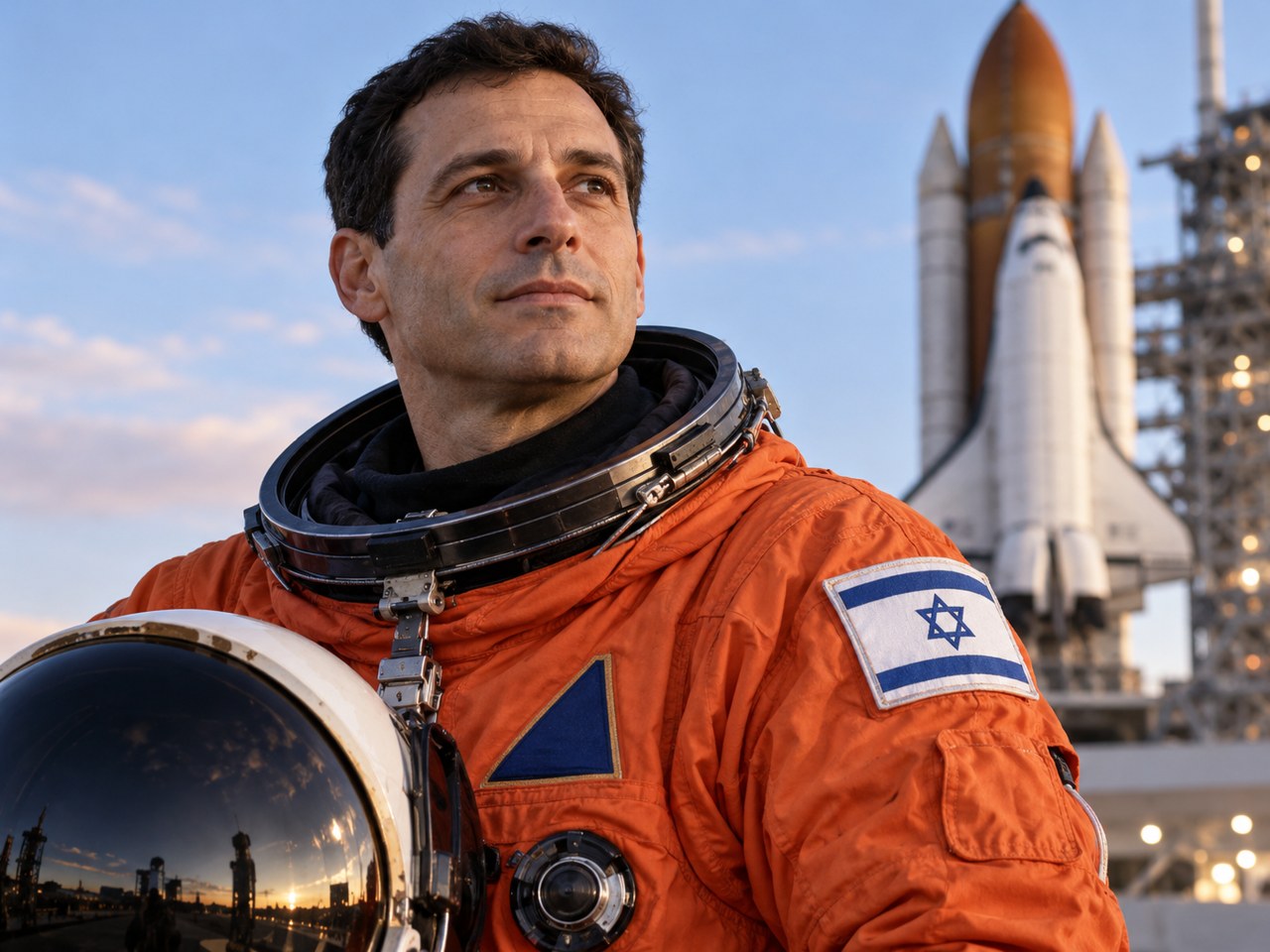
Ilan Ramon holds a singular place in Israeli memory as the country’s first astronaut. A former fighter pilot, he flew aboard the Space Shuttle Columbia on mission STS-107. For Israel, the mission carried both scientific significance and strong national symbolism: it marked visible participation in high-level human space research.
Why Israel was involved
Ramon’s role was not merely ceremonial. As a payload specialist, he was closely associated with the Mediterranean Israeli Dust Experiment (MEIDEX), which studied aerosols and atmospheric dust over the Mediterranean region. That gave the mission a specifically Israeli scientific dimension within a much broader NASA research program.
What investigators concluded
On 1 February 2003, Columbia was lost during re-entry. Investigators later concluded that the physical cause of the accident was damage to the shuttle’s left wing caused by a piece of insulating foam that broke away from the external tank during launch. During re-entry, superheated air entered through the damaged thermal protection system and destroyed the wing structure. The investigation also pointed to deeper organizational and safety-culture failures in the shuttle program.
Why the story still matters
Because Ramon was the first Israeli astronaut, the loss was felt in Israel with particular force. Yet his legacy did not end with the tragedy. Educational and commemorative projects continue to connect his name with science, aspiration and public responsibility. His story remains both inspiring and cautionary: a story of achievement, grief and the real risks of exploration.
The distinction between cause and contributing conditions
The Columbia Accident Investigation Board identified both a physical failure and institutional weaknesses. During launch, insulating foam separated from the external tank and struck the left wing of the shuttle. The damage compromised the thermal protection system. During re-entry, extremely hot gases entered the wing and caused structural destruction. The board also examined how engineers and managers communicated concerns and why evidence of a possible strike did not lead to a sufficient response. This distinction matters: a technical explanation alone cannot explain how a complex organization failed to recognize danger. Ilan Ramon’s scientific role was associated with MEIDEX, an experiment observing atmospheric dust and aerosols over the Mediterranean region. His mission was therefore part of an international research program, not simply a ceremonial flight. Museums, educational projects and NASA archives preserve both the achievements of STS-107 and the lessons of the accident. The image of an astronaut should not obscure the contributions of the entire crew.