
Israel’s air defence in 2026: Iron Dome, Arrow, Iron Beam and the drone challenge
A source-based overview of Israel’s layered missile and drone defence, verified Iran-war interception figures, the Iron Beam laser and remaining challenges in 2026.

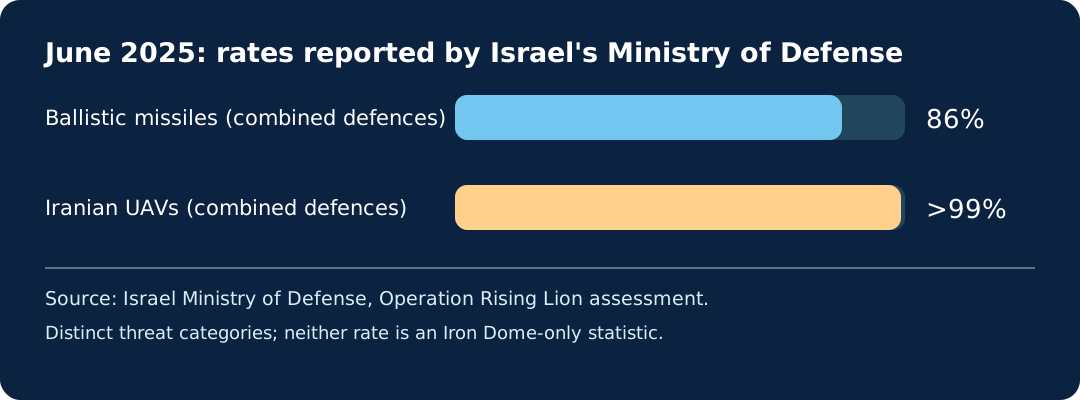
Different defensive layers
Israel uses several defensive systems because aerial threats differ in range, flight profile, speed and operational purpose. Iron Dome is associated with intercepting many short-range rockets; David’s Sling is designed for another set of missile and rocket threats; and the Arrow family addresses ballistic missiles in higher-altitude phases. Israel and international partners have also pursued directed-energy technologies, including Iron Beam, intended to complement rather than simply replace conventional interceptors. Public reports about costs and deployment schedules need their dates: production, testing, operational acceptance and routine use are not identical stages. Civilian defense also relies on early warning, shelters, emergency communication and medical preparedness. No system provides complete protection, and reports of individual engagements should be evaluated against official statements and independently documented evidence. A technical overview is useful when it explains what categories of threat each layer addresses without implying that every attempted interception succeeds.
Costs, coordination and public information
Interceptors, sensors and launch systems involve procurement, maintenance and training costs. Comparisons based on the price of one rocket or one interceptor are incomplete unless they also consider the potential harm a defense is intended to prevent. Decisions about using defensive systems belong to authorized military and civil institutions, and operational details are not fully public. Coordination between radar networks, air-force units and emergency services matters because different threats can arrive simultaneously. The public should not assume that a new weapon eliminates the need for shelters or protected rooms. The Home Front Command provides relevant civilian safety guidance in Israel, while official defense and manufacturer publications provide information about equipment. Both kinds of sources have limits and should be read with dates and attribution. A responsible article distinguishes announced projects from systems that have been formally tested and placed into operational service.
Sources and reporting periods
- Israeli Ministry of Defense, 2025 interception rates
- Israeli Ministry of Defense, Iron Beam delivery 28 Dec 2025
- Israeli Ministry of Defense, Iron Dome upgrade 30 Jun 2026
- Israel MFA, 8 Oct 2026, operational interceptions over 15 years
- US Missile Defense Agency, David’s Sling 11 Feb 2026
- US Missile Defense Agency, Arrow test 6 Aug 2026
- IDF, cumulative projectile figures 7 Oct 2026