
Israeli military service: duty, Hebrew, integration and life after the army
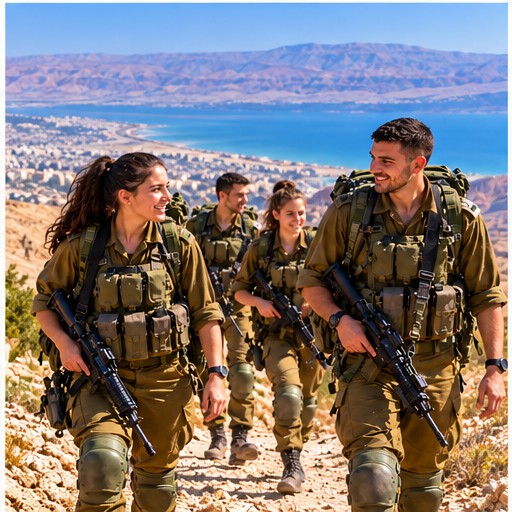
How military service in Israel works, updated 2026 durations, language learning, integration, exemptions and the long post-army trips to Asia.
A central but unequal civic experience
Military service is a defining experience for many Israelis, but not for everyone. Israel operates conscription for citizens in legally specified categories, with exemptions and alternative arrangements that vary by circumstances and may be politically disputed. For many recruits, entering the Israel Defense Forces means leaving school and moving into a system with new responsibilities, discipline, friendships and daily interaction with people from other regions. Others do not serve, and public debates about equal obligations remain among the most persistent questions in Israeli politics.
How long the service lasts in 2026
It is inaccurate to say simply that every man serves three years and every woman two years. The IDF’s public explanation lists a minimum of 32 months for men and 24 months for women, subject to conditions, roles and exceptions. In July 2026 the Knesset enacted a temporary provision delaying a planned reduction in compulsory male service so that the 32-month period would remain in effect for additional cohorts. Some military tracks have different requirements. Current personal obligations always require checking official recruitment rules, not relying on a generalized slogan.
Learning Hebrew and social integration
For new immigrants, service can be an important arena for learning practical Hebrew and entering wider Israeli social networks. Language support exists in various forms, and daily work with colleagues can accelerate fluency. This experience is not uniformly positive: some newcomers struggle with cultural differences, mental stress or the shock of institutional routines. Yet the ability to communicate in Hebrew, build friendships and learn unspoken social rules is often cited as one of the major integrative functions of army life.
Women, minorities and exemptions
Women serve in many units and professions, but access to roles, service lengths and conditions have changed over time. Religious women may qualify for exemptions or other forms of service, while policies affecting Haredi men are central to contemporary court and political disputes. Many Arab citizens are not subject to the same compulsory framework, while Druze and Circassian communities have distinctive arrangements. The IDF also includes volunteers from different backgrounds. It is important to describe this varied legal reality without implying all Israelis pass through a single identical institution.
The trip after the army
The post-army backpacking trip has become a recognizable cultural practice. After months of military schedules, some discharged soldiers spend weeks or many months abroad, especially in India, Thailand, Nepal or Latin America. They seek distance, nature, friendship, music and a chance to decide what comes next. These journeys have their own travel infrastructure, guesthouses and meeting places frequented by Israelis. They are not obligatory and do not represent everyone, but they have become a visible part of contemporary youth culture.
Between solidarity and controversy
The military can strengthen shared networks and a language of responsibility, yet it is also the institution through which Israel conducts warfare and security operations. Its role raises ongoing debates over ethics, civilian harm, personal trauma, equality of service and the relationship between military and civilian institutions. A balanced account should acknowledge friendships and integration without romanticizing war or overlooking conscientious and political disagreement. The central question is how service changes individual lives and the society to which veterans return.