
The Jewish War by Flavius Josephus: a source for ancient history
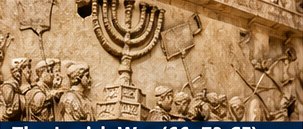
The author and his complicated position
Flavius Josephus was a first-century Jewish historian who participated in the revolt against Rome before later writing under Roman imperial patronage. This unusual biography makes his account both invaluable and controversial. He had firsthand knowledge of aspects of the war, but he also had reasons to defend his own choices and to address Roman readers. Modern historians therefore study his writings critically rather than treating every reported speech, number or motive as a verbatim record.
The seven books of The Jewish War
Josephus wrote The Jewish War in seven books, describing the political background and the conflict that unfolded from 66 CE through the destruction of Jerusalem and the resistance that followed. The account includes factional disputes, Roman military operations, sieges and the enormous suffering of civilians. Its most famous passages describe the siege of Jerusalem in 70 CE and the destruction of the Second Temple. The book is one of the principal literary sources for these events, but archaeology and other texts provide essential comparisons.
The siege and the Temple
Josephus describes food shortages, violence and fires as Roman forces under Titus advanced into Jerusalem. The loss of the Temple had religious and political consequences that transformed Jewish life in the following centuries. The author’s vivid style also seeks to persuade, assign responsibility and dramatize a catastrophic war. It matters whether a specific detail comes from an eyewitness account, hearsay, literary convention or the author’s reconstruction. Readers should ask such questions rather than confusing literary intensity with perfect historical precision.
Translations and the problem of perspective
The work survives in Greek and has been translated into many languages. Josephus may have prepared an earlier version for Aramaic-speaking readers, but the familiar text is the Greek history. English editions differ in style and notes, and older public-domain translations sometimes use unfamiliar names. Academic editions supply commentary on geography, chronology and manuscript variants. A careful article also explains how Jewish, Christian and secular historians have interpreted the same passages differently for religious and political reasons.
Why it still matters
The Jewish War connects archaeology, Roman imperial history, Jewish memory and the history of Jerusalem. Visitors to museums and archaeological sites regularly encounter references to it. Josephus does not tell the whole story, but without his writings many parts of the conflict would be harder to reconstruct. Comparing his text with coins, inscriptions, excavated objects and other authors teaches a basic historical lesson: valuable witnesses can be biased, and good historical knowledge develops through comparison rather than blind trust.
Sources
October 2026