
Jews in England and London: From Medieval Expulsion to Modern Life
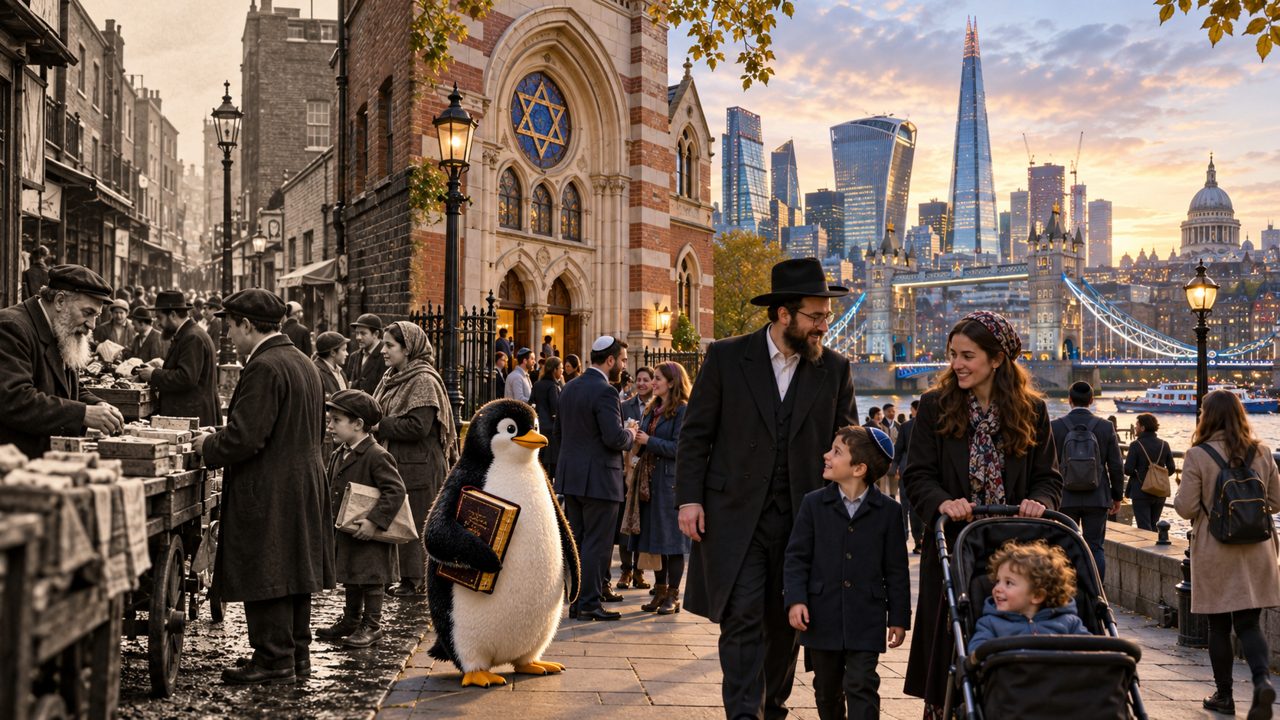
Jewish history in England includes arrival, expulsion, return and renewal. London in particular became a place where trade, immigration, scholarship, religious life and political debate shaped Jewish experience across centuries. Any honest account must hold together both hardship and creativity: restriction and integration, vulnerability and institution-building, older East End histories and contemporary suburban, religious and secular forms of life.
The medieval beginning and the expulsion
Jews were present in medieval England after the Norman Conquest, but they lived under restrictive conditions and were vulnerable to royal policy, debt politics and religious hostility. Anti-Jewish violence and blood-libel accusations formed part of this hostile environment. In 1290, Jews were formally expelled from England, creating a long break in openly organized Jewish communal life.
Return and resettlement
In the seventeenth century, Jews gradually re-established a communal presence in England, especially in London. Sephardi merchants and families played a major role in this return, and over time Ashkenazi communities also grew. Synagogues, burial societies, schools and communal charities became building blocks of modern Jewish life.
The East End and mass migration
A major transformation came with Jewish migration from Eastern Europe in the nineteenth and early twentieth centuries. Many newcomers settled in London’s East End, where poverty, labor, Yiddish culture, trade union activity, religious institutions and mutual aid all interacted. The East End became central to British Jewish memory because it held both hardship and communal energy.
Integration, politics and British public life
Over time, Jews in Britain entered many fields of public life: law, medicine, journalism, commerce, academia and politics. This process was uneven and never free of prejudice, but it reshaped what British Jewish identity could mean. Some families moved out of the older immigrant districts, while communal institutions expanded and adapted.
Jewish London today
Today Jewish life in London is diverse. It includes Orthodox, Haredi, Masorti, Reform, Liberal and secular environments; schools and universities; museums and archives; cultural production; neighborhood networks; and public debates about security, antisemitism, Israel, religion and belonging. There is no single London Jewish experience. The city contains many Jewish Londons at once.
Why this history still matters
The English and London story matters because it shows how minority life is shaped by law, migration, memory and local geography. It also shows that Jewish continuity is not automatic. It depends on institutions, families, language, learning and the ability to build communal life under changing conditions.