
Jewish pioneers in Hollywood: immigrants, film studios and a century of cinema
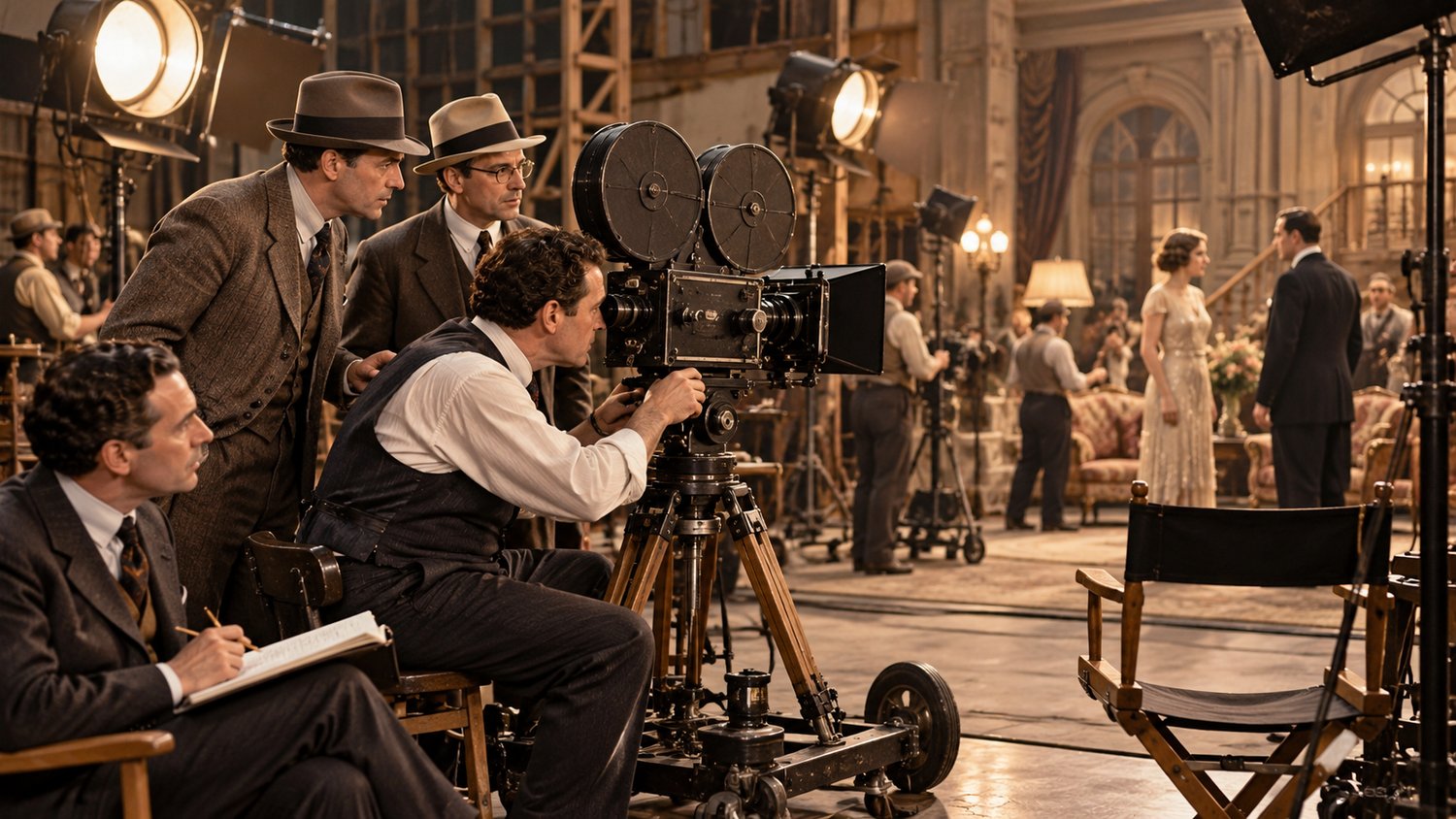
The story of Jewish people in Hollywood is a story of immigration, entrepreneurship, creative work and changing American identities. In the early twentieth century, Jewish immigrants and their children helped build several of the best-known film studios. Later generations worked as directors, writers, actors, composers, technicians and critics. Their contributions were substantial, but the diverse history of the film industry cannot be reduced to the identity of a single group.
From immigration to motion pictures
At the turn of the twentieth century, the motion-picture business was young and often regarded as a low-status novelty. Many established professions and elite business circles were difficult for immigrants to enter. Moving pictures, however, offered relatively open opportunities in small storefront cinemas called nickelodeons, film distribution and production. Jewish entrepreneurs who had learned to sell clothing, furs or theater tickets could apply those skills to a growing new industry. Their social position and practical experience help explain their success; an imagined ethnic conspiracy does not.
Some of these pioneers arrived as children from the Austro-Hungarian or Russian empires, while others were born in the United States to immigrant families. Like countless other Americans, they sought commercial success and social acceptance. Hollywood developed at the intersection of these ambitions, new camera technologies, cheap mass entertainment, Southern California weather and access to land for large studios.
The studios and their founders
Carl Laemmle helped establish Universal, and Adolph Zukor built the company that developed into Paramount. The Warner brothers created the business behind Warner Bros.; William Fox established Fox Film; Marcus Loew and Louis B. Mayer played important roles in Metro-Goldwyn-Mayer. Harry Cohn helped lead Columbia. These careers differed considerably, but they show how immigrant networks and commercial experimentation shaped the industry. The companies were not identical, and their ownership and corporate structures changed repeatedly over time.
The classic studio system brought production, distribution and sometimes movie theaters under coordinated management. Film stars signed long-term contracts, crews worked under demanding schedules, and large marketing campaigns turned movies into national events. The same system also concentrated power, limited artistic independence and could discriminate against workers. A serious history of Jewish Hollywood has to examine both its remarkable creative achievements and its inequalities.
The arrival of sound and the question of identity
The Jazz Singer, released by Warner Bros. in 1927, is often discussed as a milestone in the transition to synchronized sound. Its plot follows the son of a synagogue cantor who wants to become a popular entertainer; questions of family loyalty, assimilation, religious identity and the stage were deeply familiar to American Jewish audiences. The film is also remembered for its use of blackface, a racist entertainment convention that requires critical explanation rather than nostalgic celebration.
Not every Jewish studio executive promoted explicitly Jewish stories. Many saw themselves primarily as American businesspeople and preferred broadly appealing narratives. Some changed their names or avoided public discussion of their Jewish background in a society where antisemitism remained widespread. This tension between cultural roots and the wish to belong shaped the public image of Hollywood in the interwar years.
Antisemitism, Europe and the Second World War
The rise of Nazism brought moral and political dilemmas. American film companies had overseas markets, including Germany before the war, and executives often faced pressure to avoid subjects that might provoke governments. At the same time, some film workers and leaders aided refugees or supported films challenging fascism. Universal founder Carl Laemmle personally helped many German Jews seeking to immigrate to the United States. His efforts illustrate how the history of a commercial studio founder could intersect with the life-and-death struggle of European Jewry.
After the Holocaust, filmmakers approached antisemitism, persecution and memory in varied ways, from personal dramas to documentary testimony. Jewish experiences increasingly appeared on screen, but they were never the industry’s only subject. Later Hollywood also reflected civil rights movements, censorship battles, changing gender roles and the growth of independent filmmaking.
Creators, audiences and later generations
Beyond studio founders, Jewish screenwriters, directors, composers and performers made lasting contributions to the language of cinema. Billy Wilder helped define film noir and sophisticated comedy; Mel Brooks used satire to attack authoritarianism and prejudice; Steven Spielberg brought the Shoah to a global mass audience through Schindler’s List. Performers and filmmakers such as Barbra Streisand expanded the possibilities of public Jewish identity in American popular culture. Each career has its own aesthetic and political context.
Film scholarship also looks at editors, costume designers, composers, craftspeople and the communities around the studios. Los Angeles Jewish life developed together with the city, including synagogues, charities, schools and cultural institutions. A film history limited to a few powerful executives would miss the many people who actually made motion pictures possible.
A history worth telling without stereotypes
The claim that “the Jews control Hollywood” is an antisemitic conspiracy trope. Historical evidence shows something more specific and more interesting: a number of Jewish immigrant entrepreneurs helped create important film companies, while an enormous and diverse workforce developed the industry. Contemporary studios are large corporations with changing investors, directors, producers and employees of many backgrounds. Jewish creators are not a single coordinated political or cultural body.
The Academy Museum of Motion Pictures has devoted its Hollywoodland exhibition to the Jewish founders and the rise of the movie capital. Its research places the story within immigration history and the economics of early entertainment. Understanding that context allows recognition of genuine contributions without turning a community into a stereotype. It also explains why Hollywood remains part of the wider history of Jews in the United States and the American diaspora.