
Kabbalah: Jewish mysticism, history and meaning
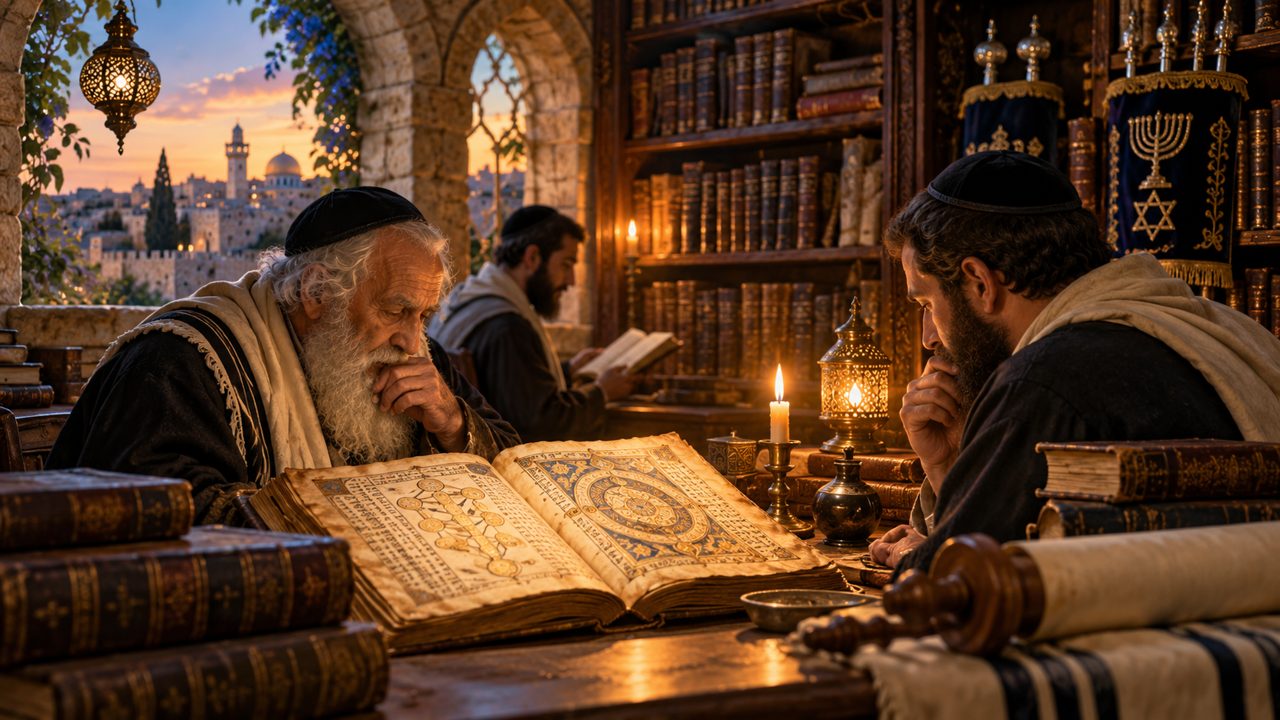
Kabbalah is the classic name for the mystical traditions of Judaism. It is not a separate religion and not a replacement for halakha or ordinary Jewish life. Rather, it is a mode of inner interpretation that asks how God, creation, language, soul, prayer and redemption are linked. For centuries, Kabbalah stood at the meeting point of study, symbol, imagination and disciplined religious practice.
Historical roots
The roots of Jewish mysticism long predate the word “Kabbalah” as it is commonly used today. Early traditions of divine chariots, heavenly palaces, angelic ascent and esoteric interpretation developed in late antiquity. In the Middle Ages, especially in Provence and Spain, these currents took more systematic form. By the thirteenth century, the Zohar emerged as the great classic of Kabbalistic literature and shaped the language of later mysticism.
The Zohar and symbolic reading
The Zohar reads the Torah as a text whose surface meaning is only one layer. Beneath the narrative and legal level lie symbolic worlds in which divine attributes, human action and cosmic repair are interconnected. Kabbalistic language often speaks of sefirot – emanative attributes or modes through which divine life is revealed. These concepts do not function as simple popular “mystical secrets,” but as a demanding symbolic grammar for reading scripture, prayer and ethics.
Safed, the Ari and the transformation of Kabbalah
In the sixteenth century, Safed in the Land of Israel became one of the most important centers of Kabbalah. Thinkers such as Rabbi Moses Cordovero and Rabbi Isaac Luria, known as the Ari, transformed the field. Lurianic Kabbalah introduced powerful themes such as tzimtzum, shevirat ha-kelim and tikkun – contraction, shattering and repair – to explain creation, brokenness and the religious role of human action. These ideas influenced prayer, custom, theology and later Hasidic teaching.
Kabbalah and religious life
Kabbalah did not remain only a library tradition. It influenced liturgy, Sabbath customs, meditation, poetry, ethics and the emotional texture of Jewish devotion. Piyyutim such as Lecha Dodi emerged from the spiritual world of Safed. The idea of welcoming the Sabbath as a bride, the symbolic meaning of candles, and the inner intention of prayer all show how mystical thought entered communal practice.
Modern scholarship and Israeli study
Modern academic study of Kabbalah was shaped above all by Gershom Scholem and later scholars such as Moshe Idel and others. Their work showed that Jewish mysticism must be studied historically, philologically and comparatively, not as superstition or folklore. In Israel, the National Library of Israel, the Scholem Collection, Hebrew University traditions and Bar-Ilan’s Jewish philosophy programs all help keep the field alive as a serious area of study.
Modern Orthodoxy and contemporary interest
Modern Orthodoxy usually approaches Kabbalah with both respect and caution. It recognizes the importance of the Zohar, the Ari and mystical interpretation, yet often resists shallow popularization detached from texts, halakha and responsible teachers. In wider Jewish life today, Kabbalah attracts religious seekers, traditional communities, academic researchers and curious readers. The challenge is to distinguish between disciplined Jewish sources and commercialized mysticism with little grounding.
Why Kabbalah still matters
Kabbalah matters because it offers a language for inner depth without leaving the world of mitzvot, community and Torah. It speaks about brokenness and repair, exile and return, hiddenness and revelation. For some readers it is a demanding field of scholarship; for others it is a spiritual horizon within Jewish life. In either case, it remains one of the most creative and influential forms of Jewish thought.