
Lecha Dodi: the Shabbat hymn, its poetry and its Kabbalistic world
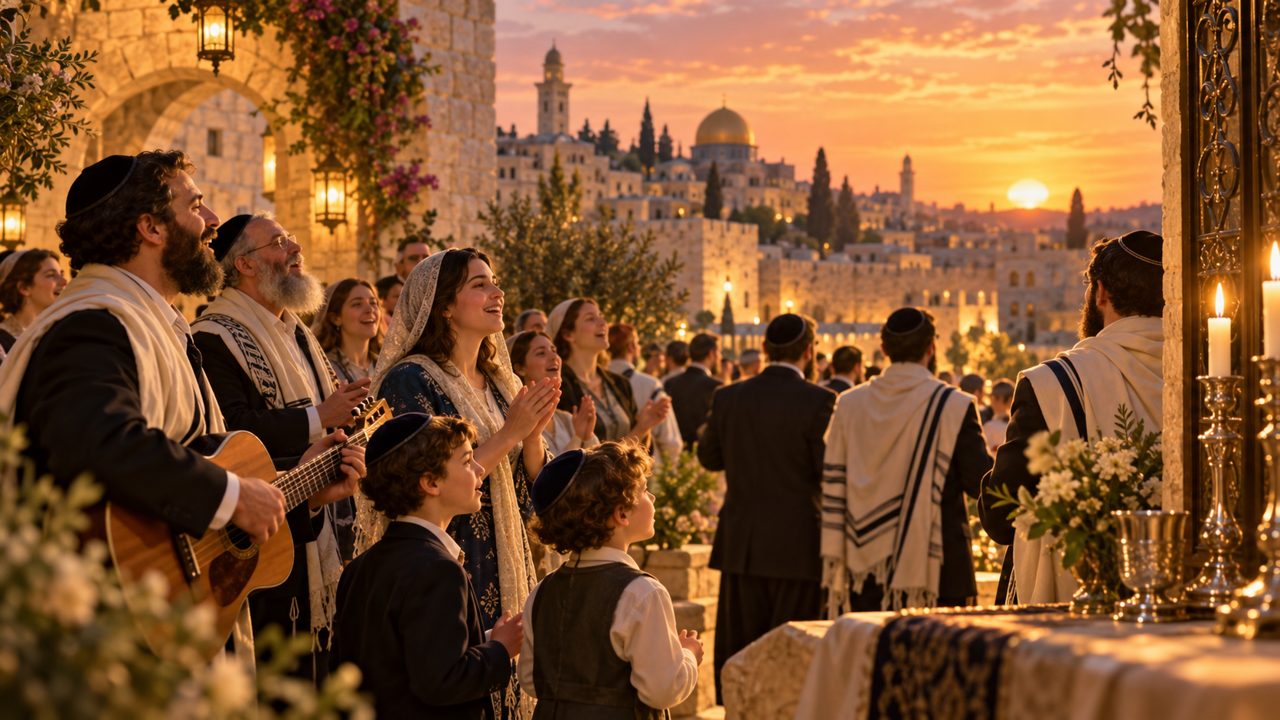
Lecha Dodi is one of the best-known hymns in Jewish liturgy. Sung on Friday evening during Kabbalat Shabbat, it welcomes the Sabbath as a bride and queen. The poem is emotionally accessible, but its imagery also comes from a deeply Kabbalistic world. That combination – lyrical warmth and mystical depth – helps explain why it spread into almost every Jewish community.
Its author and place of origin
The piyut was composed in the sixteenth century by Rabbi Shlomo Alkabetz, a Kabbalist associated with Safed. Safed at that time was a remarkable center of spirituality, law, mysticism and poetry. The city’s circle of kabbalists developed the ritual of Kabbalat Shabbat, and Lecha Dodi became the centerpiece of that new liturgical moment.
Text, structure and symbolism
The refrain, “Come, my beloved, to greet the bride; let us welcome the Sabbath,” gives the hymn its emotional heart. The poem uses biblical language, especially from Song of Songs, prophetic restoration imagery and rabbinic ideas of Shabbat as a royal or bridal presence. The acrostic of the stanzas spells the author’s name, Shlomo HaLevi. The hymn moves between theology, yearning, redemption and communal welcome.
Kabbalistic meaning
In the mystical world of Safed, Shabbat was not only a day of rest but a moment of union, blessing and cosmic harmony. Welcoming Shabbat meant welcoming the Shekhinah, the indwelling divine presence. The poem therefore works on several levels at once: it is a congregational song, a theological meditation, a poetic work and a mystical invitation. The well-known custom of turning toward the entrance or westward in the final stanzas reflects this symbolic act of greeting the Sabbath bride.
Music and communal life
Lecha Dodi has been sung to countless melodies across Sephardi, Ashkenazi, Mizrahi, Yemenite, Hasidic and modern synagogue traditions. Few texts show Jewish pluralism so clearly. In one community the melody may be solemn; in another, joyful and expansive. The text stays recognizably the same, but the musical body changes with geography, memory and communal taste.
Modern Orthodoxy and wider Jewish practice
Modern Orthodox communities generally retain Lecha Dodi as a central part of Friday evening prayer. In many places it is sung with dignity but also with emotional warmth, sometimes to newer tunes. More traditional or Hasidic communities often emphasize its mystical resonance, while liberal communities may shorten or adapt it. Yet across these differences, the hymn remains a bridge between text, community and sacred time.
Why Lecha Dodi endures
Lecha Dodi endures because it joins theology to music and ritual to beauty. It invites the congregation to feel Shabbat arriving, not merely to state that it has arrived. Its language of bride, queen, redemption and consolation gives voice to longing as well as joy. That is why the poem remains one of the clearest examples of how Kabbalah entered mainstream Jewish prayer.