
Mea Shearim and the Jewish communities of Jerusalem
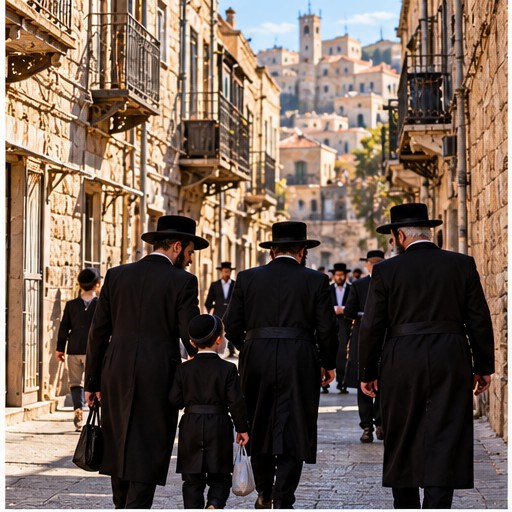
A guide to Mea Shearim, historic Haredi neighborhoods and the diversity of Jewish life in Jerusalem without calling one neighborhood the largest.
Jerusalem is not one Jewish neighborhood
When people imagine religious Jewish Jerusalem, they often picture Mea Shearim: narrow streets, Hebrew and Yiddish signs, traditional dress, prayer houses and residents whose daily life follows a detailed religious calendar. The neighborhood is important and famous, but it is not accurate to call it Jerusalem’s largest Jewish neighborhood without reliable population comparisons. Jerusalem contains many Jewish communities, from secular and Modern Orthodox districts to Hasidic and other Haredi neighborhoods, each with different histories and everyday customs.
How Mea Shearim developed
Mea Shearim emerged in the nineteenth century as Jews expanded residential life beyond the crowded Old City walls. It became associated with communal institutions, traditional study and ways of organizing local life around synagogues, courts and schools. The name comes from the biblical phrase “a hundredfold” in Genesis. The area grew into a center of Haredi life while Jerusalem itself expanded into a modern city with universities, government offices, hospitals and neighborhoods very different from Mea Shearim.
Dress, language and Sabbath
Visitors may hear Yiddish and Hebrew, encounter men in dark suits and hats, women wearing modest dress and families moving between shops, schools and synagogues. On Shabbat the neighborhood changes character as commerce pauses and religious observance fills public space. Clothing is only one aspect of identity, not a complete guide to individual belief. Different Haredi groups maintain different traditions and may disagree profoundly on political participation, education and relations with the wider state.
Faith and civic boundaries
Religious Jerusalem contains communities that are deeply engaged with Israeli institutions and others that prefer distance from secular state structures. These distinctions have historical roots in debates over Zionism, authority and Jewish law. In the public imagination, unusual clothing may overshadow ordinary concerns: housing, health, income, childhood education and relations with neighbors. A balanced article treats residents as people living complex lives rather than symbols in a tourist image or a political argument.
Neighborhoods and the larger city
Other parts of Jerusalem, including Geula, parts of Sanhedria and other Haredi districts, share some features with Mea Shearim, while areas such as Rehavia, Baka, Arnona and Ramot contain different mixes of religious and secular residents. Jewish Jerusalem also includes immigrant traditions from North Africa, the Middle East, Europe, Russia, Ethiopia and the Americas. No single district can stand for all these communities. The diversity of prayer rites, languages and social backgrounds is part of the city’s modern identity.
Visiting with respect
Anyone visiting Mea Shearim should remember that it is a residential neighborhood, not a staged cultural attraction. Respect Sabbath norms, avoid intrusive photographs and do not assume private courtyards or religious institutions are public museums. Learning about the community through historical research and interviews is more useful than searching for stereotypes. Jerusalem’s Jewish history is best understood as a mosaic: places such as Mea Shearim matter precisely because they are distinctive parts of a much larger city.