
Munich 1972: the attack on Israel’s Olympic team and its legacy
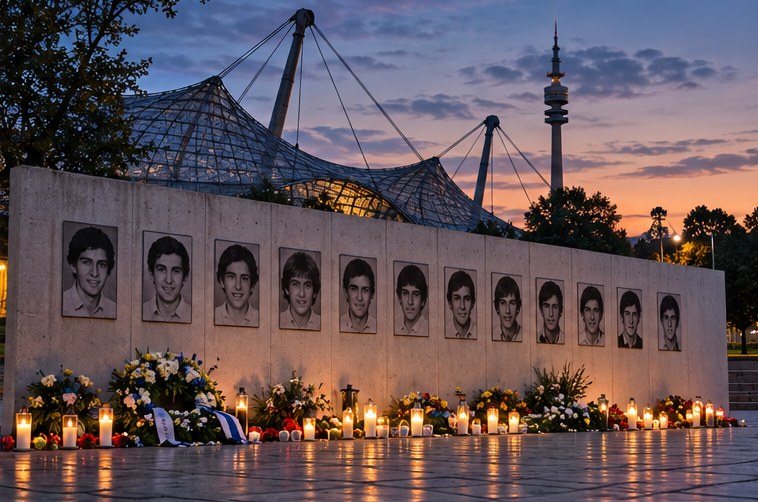
The attack by Black September during the Munich Olympics, the eleven Israeli victims, failed rescue and long struggle for remembrance.
The Games and the attack
The 1972 Summer Olympics in Munich were designed to project an open, peaceful image of a democratic West Germany. That intention was shattered on 5 September when members of the Palestinian militant organization Black September entered the Olympic Village and attacked members of the Israeli delegation. Wrestling coach Moshe Weinberg and weightlifter Yossef Romano were killed early in the assault; nine Israelis were taken hostage. The violence made the Olympic movement confront terrorism and security failures on a world stage.
Eleven Israelis and a German officer
The standoff lasted for hours while negotiators sought a solution. A poorly coordinated rescue attempt at the Fürstenfeldbruck airbase ended disastrously. All nine remaining Israeli hostages were murdered, bringing the Israeli death toll to eleven. A German police officer was also killed. The victims included athletes, coaches and a judge from different sports, people who had travelled to represent their country rather than to take part in any military confrontation. Their individual names, ages and lives deserve attention beyond the collective number.
Security failures and public shock
The Munich attack exposed problems of preparation, command and coordination. Officials had hoped to avoid the militarized image of earlier German history and did not anticipate an operation of this kind. During the crisis, poor information and unrealistic tactical planning made the situation worse. Images and reports spread worldwide, turning the attack into a defining moment for television-era news. The failure of the rescue produced decades of investigation, disagreement and demands for transparency.
The decision to continue the Games
The Olympic Games were suspended briefly and then resumed. The decision remains controversial. Defenders argued that allowing terrorism to halt international sport entirely would hand victory to the attackers. Critics believed that resuming competitions so soon diminished the mourning owed to the dead. The argument reflects a difficult question that extends far beyond the Olympics: how does a public institution preserve its mission while giving adequate space to grief after a mass-casualty attack?
Families, evidence and accountability
The victims’ families pressed for recognition and access to records for many years. Their campaign helped keep attention focused on the specific failures of 1972 rather than only on abstract slogans about unity. Germany and Israel have held commemorations, and the Olympic movement has gradually expanded public remembrance. The attack also helped reshape protective arrangements for international sporting events, although security planning everywhere remains a balance between openness, privacy, cost and risk.
Remembering more than a tragedy
The eleven Israeli victims should be remembered as people with careers, families and aspirations. The Israeli Olympic Committee preserves their names and biographies, while the IOC and Munich memorial sites provide historical material for younger generations. Munich 1972 changed sports security and Israeli public memory, but the central moral point remains simple: participation in international sport must never make competitors targets for political violence. Remembrance is strongest when it combines factual accuracy with respect for individual lives.