
The Ohel in Queens: Chabad visits to the Lubavitcher Rebbe
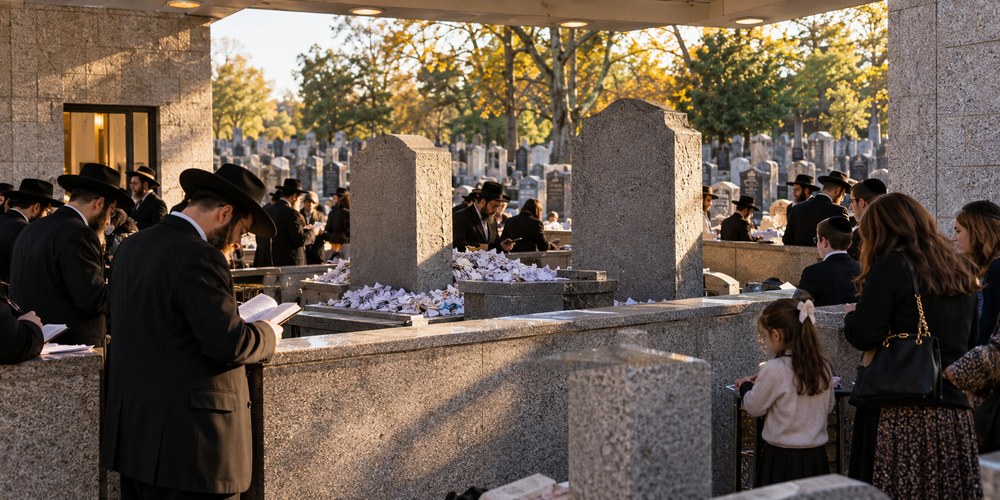
Why people travel to the grave of Rabbi Menachem Mendel Schneerson, what the visit means and how it differs from 770 Brooklyn. The following article distinguishes documentary facts, religious beliefs, historical memories and modern public practices.
A place of prayer in Queens
The Ohel is the gravesite of the seventh Lubavitcher Rebbe, Rabbi Menachem Mendel Schneerson, who died in 1994, and his father-in-law Rabbi Yosef Yitzchak Schneersohn. It is in the Old Montefiore Cemetery in Queens, New York, not at the Chabad headquarters building in Brooklyn. Many thousands of visitors come to pray, reflect and ask for blessings.
Why people make the journey
Visiting the resting place of a revered religious teacher is a longstanding Jewish practice in some communities. At the Ohel people pray to God and remember the Rebbe’s teachings, often bringing written personal requests. Some come on anniversaries or birthdays; others visit during ordinary weeks. The reasons range from grief and gratitude to uncertainty about family or work.
How a visit usually works
Visitors can prepare a note, spend time studying or praying in the nearby center, and enter the open-roofed gravesite in a respectful manner. According to Chabad’s visitor guidance, the center provides practical facilities and assistance. Practices differ among visitors; the point is reflection and prayer rather than tourism or a public spectacle.
The Rebbe and his worldwide influence
Rabbi Schneerson was one of the major figures of twentieth-century Hasidism. He encouraged Jewish education and outreach and oversaw the growth of Chabad institutions in many countries. His death did not end the network; communities and emissaries continue to operate. The Ohel became a place where admirers connect memory, personal prayer and shared identity.
Brooklyn and Queens are different
The famous 770 Eastern Parkway building stands in Crown Heights, Brooklyn. The Ohel is at the Old Montefiore Cemetery in Cambria Heights, Queens, next to a dedicated visitor center. Chabad provides directions and sometimes transport information between the locations. Confusing them leads to bad visitor advice and muddled history.
Respectful information
Not all Jews share the same customs regarding visits to graves. A descriptive article should explain what participants themselves believe without presenting religious hopes as measurable facts. The official Ohel and Chabad websites provide guidance about entry, etiquette, prayer and transport. Visitors should verify practical arrangements before travel.