
Sergei Courtyard and the Russian Compound in Jerusalem
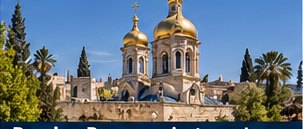
A Russian landmark in the center of Jerusalem
Sergei Courtyard, sometimes called Sergei Palace or Sergei Compound, is part of Jerusalem’s nineteenth-century Russian Compound. It was built around 1890 as accommodation and a center for Russian Orthodox pilgrims visiting the Holy Land. The complex is associated with Grand Duke Sergei Alexandrovich and the Imperial Orthodox Palestine Society. Its stone architecture, enclosed courtyard and distinctive corner tower make it recognizable amid the streets of central Jerusalem. It tells a story of pilgrimage and imperial patronage rather than of the modern Israeli state alone.
Pilgrims and imperial connections
Russian Orthodox visitors came to Jerusalem to pray at Christian sites and to participate in festivals. During the nineteenth century, Russian institutions created churches, hospices and other facilities supporting these travelers. The Holy Trinity Cathedral and surrounding buildings belong to this historical landscape. Sergei Courtyard was designed as more comfortable accommodation than mass hostels, reflecting social distinctions among pilgrims. The Society also promoted religious education and charitable work, creating networks between Russia and communities in Ottoman Palestine.
Changing uses in the twentieth century
Political revolutions, war and the changing sovereignty of Jerusalem altered the use and ownership of former Russian properties. Some buildings served new civil or government functions, while Russian organizations pursued claims based on historical ownership. After legal and diplomatic negotiations, Israel transferred Sergei Courtyard to Russia in 2008. Restoration work subsequently sought to revive the nineteenth-century architectural character. Public discussions around the transfer reveal how heritage buildings can become symbols of present-day international relationships.
Restoration and reopening
The restored complex reopened in July 2017 after several years of conservation work. Reports described an interior garden, preserved stonework and facilities intended to welcome visitors and pilgrims again. Restoration does not reproduce the past exactly: modern safety requirements and hospitality services must be integrated with older structures. Photographs taken before and after renovation can help explain what was preserved. The site is best understood in conjunction with the cathedral and the wider Russian Compound rather than as an isolated hotel.
Religious and urban context
Today, the area connects Jerusalem’s Christian pilgrimage history with diplomatic, tourism and urban heritage debates. Nearby streets serve residents, office workers and tourists who may not realize that the complex once formed part of a vast network of Russian Orthodox institutions. Accurate visitor information should come from current operators because access can change. Historians distinguish the architectural significance of the compound from legal or political claims made about it by contemporary governments.
Sources
October 2026