
Shabbat in Modern Orthodox Judaism: rest, prohibitions and everyday life
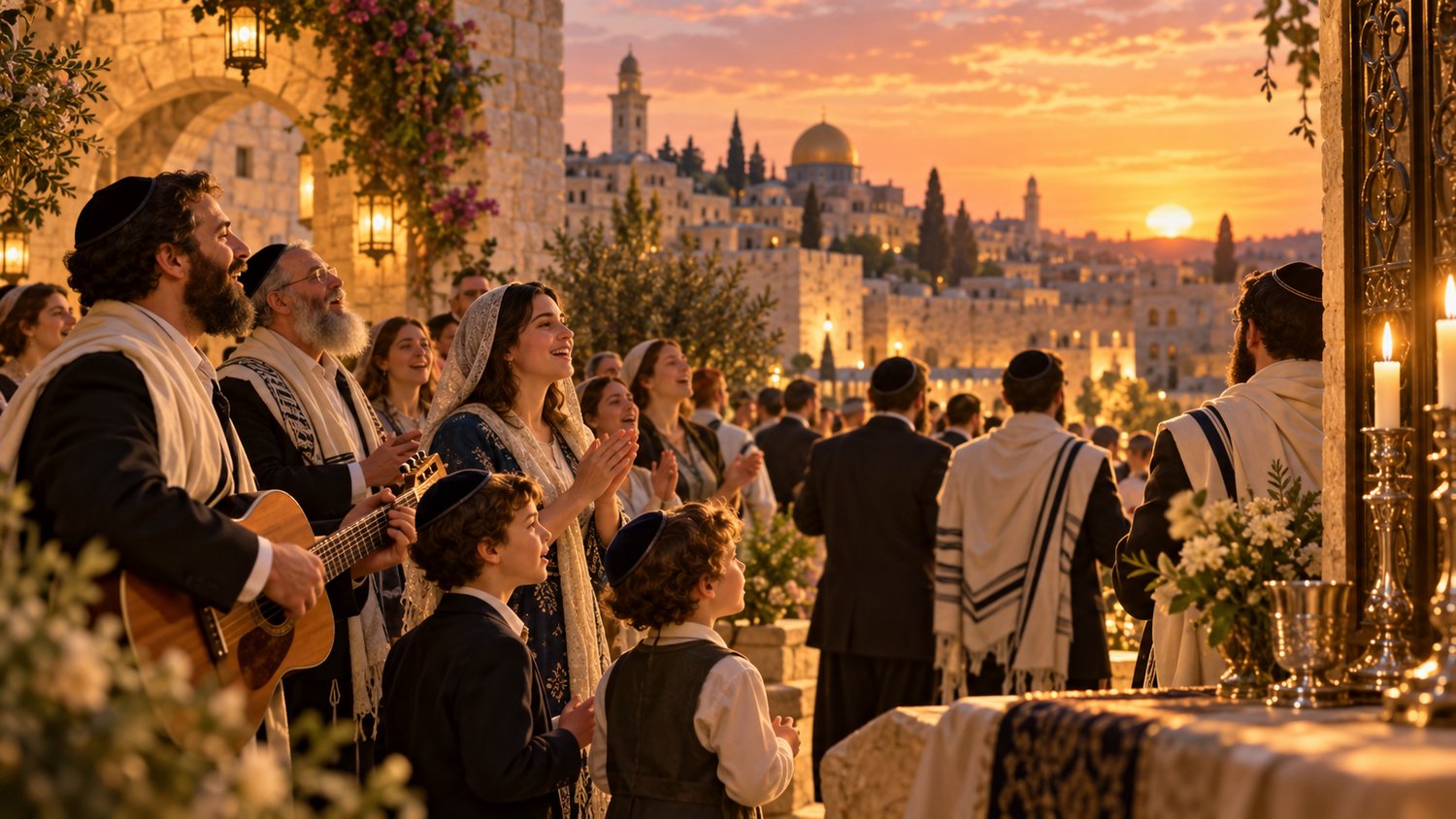
Shabbat begins before sunset on Friday and ends after nightfall on Saturday. For Modern Orthodox Jews, it is not simply a day without paid employment: it is a weekly period shaped by prayer, family meals, communal worship and detailed Jewish law. Modern Orthodox communities generally accept halachic restrictions while participating in higher education, professions and modern civic life.
The meaning of rest and the 39 categories
The Torah commands the seventh day as a day of rest and holiness. Rabbinic tradition identifies 39 categories of melacha, often translated as “work,” that relate to creative activities rather than physical effort alone. Examples include writing, cooking, kindling a fire, building and transferring objects between particular domains. Physical exertion can sometimes be permitted, while switching on an electrical device may be prohibited even if it requires almost no effort. The purpose is a structured change in how people use their time and shape the world.
Shabbat is therefore not described adequately by a list of forbidden actions. Families welcome it with candles before sunset, blessings over wine or grape juice, festive bread, singing, Torah study and meals. Synagogue services and a walk with friends may be central parts of the day. The closing Havdalah ritual marks the return to the ordinary week.
Electricity, phones and modern technology
Orthodox rabbinic authorities generally prohibit directly operating electrical devices on Shabbat, although they have debated the precise legal basis for this restriction. People typically avoid phones, online messaging, television, photography, payment terminals and switching lights on or off. Many homes prepare in advance: lights are left on or placed on timers, food is kept warm in permitted ways, and necessary appliances may continue operating without being manually adjusted.
These practices do not mean that modern religious families reject technology. Instead, they use it differently on different days. Some hotels have Shabbat elevators, and discussions about medical devices, mobility aids, sensors and smart-home systems require specialized rabbinic guidance. A system advertised as “Shabbat mode” does not automatically solve every halachic issue.
Carrying, travel and public space
Traditional halacha restricts carrying objects between certain private and public domains on Shabbat. An eruv, when constructed and maintained in accordance with relevant legal rules, can permit carrying ordinary permitted items within a defined area. An eruv does not make prohibited objects, financial transactions or mobile-phone use generally permissible. Communities also differ about walking distances and practical travel questions; driving in an internal-combustion vehicle is generally prohibited in Orthodox practice.
In Israel the contrast between religious and secular neighborhoods is particularly visible on Friday evening and Saturday. Some streets become quiet, while other places continue operating. These differences can generate political debate about public transportation, commerce and freedom of religion. Modern Orthodox families occupy various positions within those debates.
Health, emergencies and human life
A central principle is pikuach nefesh: preserving human life overrides Shabbat restrictions when there is danger or a credible medical need. Calling emergency services, traveling for urgent treatment or operating medical equipment may be not merely permitted but required. Individuals should not delay emergency care in order to seek a formal ruling. Routine medical questions can involve more nuanced guidance.
Modern Orthodox practice also changes with family circumstances. A parent caring for a small child, a person living with a disability, or someone who depends on medical technology may need different practical arrangements. Compassion, safety and responsible preparation belong alongside the legal discussion.
The spirit of Shabbat today
Many participants describe the weekly break from phones, business and constant news as liberating. Other Jews observe Shabbat differently, including Conservative, Reform, secular and cultural approaches. No single household represents every Jewish tradition. Modern Orthodox Judaism combines adherence to halacha with participation in contemporary society, so Shabbat can involve serious practical planning as well as joy.
The day is often called a taste of a more peaceful world. A careful explanation of its rules should therefore also describe singing, hospitality, rest and community, not only restrictions. That balance helps readers understand why Shabbat remains central to Jewish life in Israel and throughout the diaspora.