
Jewish migration to Germany: Soviet newcomers, Israelis and the Milky debate
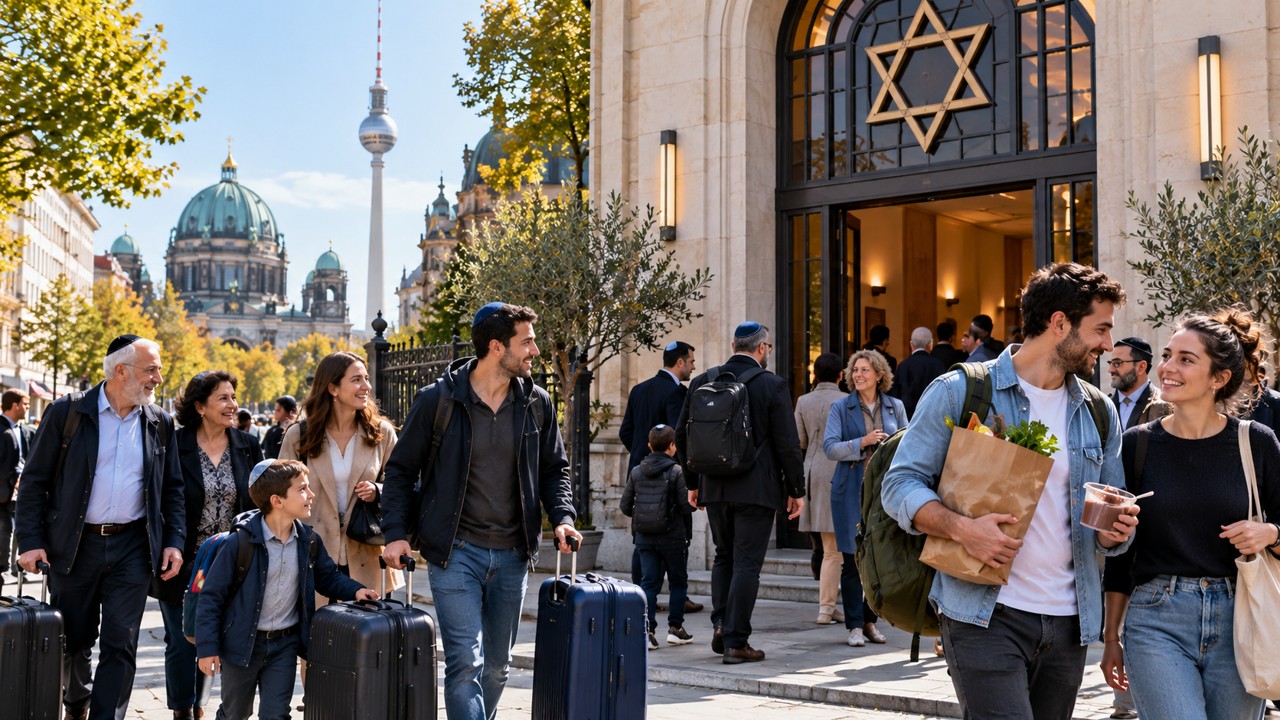
How post-Soviet Jewish immigration rebuilt communities across Germany, why some Israelis chose Berlin, and what the Milky controversy revealed about identity and living costs.
Two movements, not a single wave
Modern Jewish life in Germany was profoundly changed by two different kinds of migration. From the early 1990s, large numbers of Jews and their families arrived from the former Soviet Union. Their arrival helped revive established congregations and build new institutions. Later, Berlin also attracted a much smaller group of Israeli citizens looking for work, study, culture or less expensive daily life. The two histories intersect, but they should not be combined into one numerical total.
The post-Soviet turning point
When Soviet emigration restrictions eased and the Soviet Union collapsed, many Jewish families gained choices that had been unavailable for decades. In 1991 Germany agreed to admit Jewish immigrants from former Soviet territories through a special arrangement. The Federal Office for Migration and Refugees documents more than 200,000 arrivals since 1993. A later compilation puts the cumulative figure at roughly 220,000 by 2022, including spouses and children. These are admissions over time rather than people who all remain in Germany today. Their migration motivations varied considerably, from religious and personal freedom to family ties, education and professional opportunity.
From fragile institutions to congregations nationwide
Before this arrival, many Jewish communities in Germany were small, ageing and concentrated in a limited number of cities. Newcomers transformed life in Berlin, Frankfurt, Munich, Hamburg, Hanover, Leipzig, Dresden, Cologne and numerous smaller towns. They helped sustain synagogue services, schools, cultural programs, welfare organizations and youth activities. Russian-language programming became particularly important, while younger generations grew up speaking German and often maintaining connections to Hebrew and Russian as well. These changes did not follow a single pattern: some families were observant, while others understood Jewish identity primarily through ancestry, history or culture.
Progressive and liberal Judaism across Germany
Jewish communal growth has not produced one uniform religious model. In addition to traditional congregations, liberal and progressive prayer groups operate in different parts of the country. Their approaches to worship and participation may differ from those of more Orthodox institutions, including in the religious roles open to women. The Union of Progressive Jews in Germany represents part of this landscape. For 2023, published data counted approximately 90,500 registered members in 105 mainstream congregations, alongside 19 progressive congregations with about 4,000–4,500 members. These figures should not be confused with the entire Jewish-origin population, which also includes people outside organized religious life.
What does the figure of 200,000 actually mean?
It is misleading to say that Germany now has 200,000 synagogue members. Roughly 220,000 is the cumulative count of post-Soviet arrivals over a long period, including certain family members. Membership in recognized Jewish congregations is considerably smaller. A broad demographic estimate put the population with Jewish connections at about 225,000 in 2021, but that number uses a much wider definition than religious membership. Researchers may distinguish people who identify as Jewish, those with a Jewish parent and non-Jewish relatives living in the same families. Each group tells a different part of the story.
The Israeli route to Berlin and the Milky controversy
A later Israeli migration debate took its name from a dessert. In 2014, a Facebook campaign called Olim leBerlin compared supermarket prices in Berlin and Israel. A cheap chocolate pudding sold in a German discount store was contrasted with the Israeli Milky brand and became a shorthand for high living costs in Tel Aviv. This prompted a fierce public argument over housing prices, jobs, patriotism and the particular emotional significance of Israelis choosing Germany after the Holocaust. But the media attention should not be mistaken for evidence of a huge new exodus. The campaign organizer subsequently returned to Israel, while a diverse Israeli community continued to develop in Berlin.
One country, many Jewish lives
Contemporary Jewish Germany includes families whose roots are in the former Soviet Union, Israelis, long-established German Jewish households and people from other backgrounds. Some gather in liberal synagogues, others in Orthodox congregations or independent cultural spaces, and many are not members of any synagogue. Community life extends well beyond Berlin into regions across the country. At the same time, increased antisemitism and concern for safety remain serious challenges, particularly after October 2023. The enduring significance of these migration histories is not simply population growth: it is the rebuilding of social institutions and the creation of a plural Jewish future in a country with an extraordinarily painful past.
Sources and further reading
- Bundesamt für Migration und Flüchtlinge (BAMF): Jüdische Zuwanderung
- Mediendienst Integration: Jewish immigration from the former USSR
- Mediendienst Integration: Jewish population and congregations
- Bundeszentrale für politische Bildung: Jüdische Kontingentflüchtlinge
- Zentralrat der Juden in Deutschland
- Zentralrat: Gemeindebarometer 2024
- Jüdische Allgemeine: Pudding und Proteste (2014)
- bpb: Berlin, Berlin! Junge Israelis und die deutsche Hauptstadt