
The Syriac Orthodox community and Saint Mark Monastery in Jerusalem
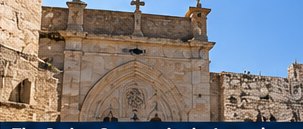
A small ancient Christian community
The Syriac Orthodox community is part of Jerusalem’s diverse Christian landscape. Its liturgy preserves forms of Syriac, a literary language closely connected to Aramaic, and its churches maintain traditions rooted in the eastern Mediterranean and Mesopotamia. The community should not be confused with all Syrians or with Arabic-speaking Christians in general. Its identity developed through specific theological traditions, monasteries and family networks, and its members have lived in Jerusalem alongside Armenians, Greeks, Latins, Copts and other Christian communities.
Saint Mark Monastery
Saint Mark Monastery, in Jerusalem’s Old City, is an important Syriac Orthodox religious center. Church tradition associates the site with the house of Mary, mother of John Mark, and with events remembered from early Christianity, including the Last Supper. Those identifications are matters of sacred tradition rather than facts independently established by archaeology. Visitors may see religious artworks, inscriptions and rooms used by the community. The monastery remains a place of prayer and not merely a sightseeing location.
Liturgy and language
Syriac prayers, chants and manuscripts are central to the community’s inheritance. Clergy and scholars have preserved texts across centuries of migration and political change. Many members also speak Arabic and other modern languages, reflecting everyday life in Jerusalem and international diaspora connections. The use of Syriac in worship is one reason the monastery matters to historians of Christianity, linguists and people interested in the survival of minority languages. Translation is helpful, but it cannot fully convey the sound of the chants.
The status quo and coexistence
Jerusalem’s churches share space in a city claimed as holy by multiple faiths. Access to churches, processions and historic rights sometimes depends on long-standing understandings known collectively as the Status Quo, though its detailed provisions vary by site. Smaller communities often face challenges maintaining buildings and supporting clergy while their populations remain limited. Reporting should respect their own voices and avoid treating them as merely picturesque survivals of antiquity.
Visiting and preserving heritage
The Old City is densely built, and religious entrances may be easy to overlook. Anyone planning to visit should ask about service times and whether visitors are permitted, particularly during major festivals. Photographs of clergy and worshippers should be taken only with consent. The history of the Syriac Orthodox community adds an important perspective to Jerusalem: the city’s Christian presence has never belonged to a single denomination or language.
Sources
October 2026