
Tefillin: the boxes, the Torah verses and morning prayer
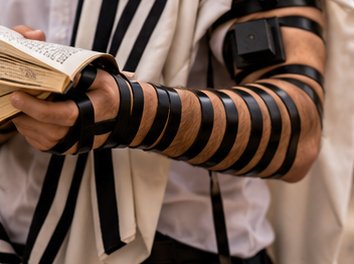
Two small boxes with written scripture
Tefillin are a pair of black leather boxes attached to leather straps and traditionally used during weekday morning Jewish prayer. Inside are handwritten parchment passages from the Torah, including verses from Exodus and Deuteronomy. One box is placed on the upper arm and the other on the head. The practice expresses the biblical instruction to bind God’s words as a sign on the hand and between the eyes. The objects are made by specialist craftspeople according to detailed religious requirements.
The arm and the head
The arm tefillin is normally positioned on the weaker arm, close to the heart, with the strap wound along the arm and hand according to communal custom. The head tefillin sits above the forehead near the hairline, with straps passing around the head. The symbolism links thought, emotion and action. There are variations in the sequence of blessings and wrapping techniques among Jewish traditions, and visitors should not assume that a single online diagram represents every family or synagogue.
When tefillin are worn
In Orthodox practice, men who have reached bar mitzvah age usually wear tefillin on ordinary weekdays during morning prayers, but not on Shabbat or major Jewish festivals. Some Conservative communities include women in the practice, while Reform and other liberal communities differ widely. Religious law also contains detailed discussions of cleanliness, intention and the care of the boxes. The question of who wears tefillin is therefore connected to broader debates over ritual obligation and gender within contemporary Jewish life.
Making and checking sacred objects
Parchment texts are written by a trained scribe, traditionally called a sofer, using methods intended to ensure accuracy. The boxes and straps require particular materials and construction. Damaged boxes or lettering may render a set unsuitable for ritual use, so specialists inspect them. Because tefillin are sacred objects, they are not simply decorative souvenirs. When photographing or handling them at a synagogue, visitors should seek permission and take care not to disrupt a person who is praying.
A practice of memory
Tefillin are one example of how Jewish tradition integrates physical gestures with study and prayer. The weekly rhythm matters: a worshipper places the objects on, recites blessings, remembers the words of the Torah and then removes them after prayers. People who have not worn tefillin regularly may learn from a teacher or family member. Explaining the practice respectfully means presenting it as a living ritual rather than as an exotic object detached from the people who use it.
Sources
October 2026