
Tefillin: meaning, daily practice and craftsmanship
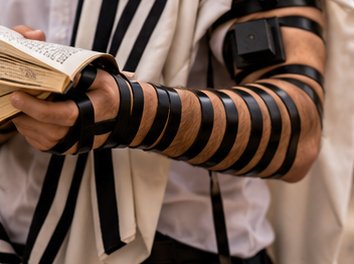
Tefillin are small black leather boxes containing handwritten biblical passages, worn during weekday morning prayers in many Jewish traditions.
The biblical basis
Tefillin are connected with biblical commands to bind sacred words as a sign on the hand and between the eyes. Rabbinic tradition interprets these passages through the practice of wearing two small boxes: one on the arm and one on the head. The texts inside include passages from Exodus and Deuteronomy. The use of tefillin links body, memory and prayer, symbolizing a commitment to put religious teaching into thought and action.
How they are made
Traditional tefillin contain parchment written by a trained scribe, called a sofer. The passages must be written according to detailed religious requirements. The leather boxes and straps also follow specifications concerning shape, placement and construction. For observant communities the craftsmanship is not merely aesthetic: valid writing and materials matter religiously. For that reason purchasers often seek a reliable seller and sometimes have tefillin checked by specialists.
The daily ritual
Many Jewish men begin wearing tefillin on weekdays around the age of bar mitzvah; some communities also encourage or permit women to wear them. Tefillin are ordinarily not worn on Shabbat or major festivals according to most traditional practices. There are different customs for wrapping the strap around the arm and fingers. Prayers and blessings accompany putting them on, with variations in local rites.
Meaning and interpretation
Teachers often describe the head tefillin as a reminder about intention and thought, while the arm tefillin evokes action and the heart. These are interpretations of a broader legal and spiritual practice rather than the only possible explanation. Tefillin can be emotionally important to families and communities, especially when a first pair is given to a teenager or passed down with memories attached.
Respectful observation
Visitors should not assume that tefillin are theatrical costumes or simply visual religious symbols. They are sacred ritual objects. Someone observing the practice in a synagogue should avoid interrupting prayer or touching another person’s tefillin without permission. Museums displaying historic examples can explain regional craftsmanship and the continuity of Jewish practices across many centuries.
Two parts, two placements
The arm tefillin, shel yad, contains four biblical passages written on parchment and placed within a single compartment. The head tefillin, shel rosh, divides the same passages into four compartments. The arm box is worn facing the heart and the head box above the hairline. Customs governing the winding of the straps differ among Ashkenazi, Sephardi and other communities; photographs should therefore not be used as the sole basis for practical instruction.
When tefillin are worn
In traditional daily practice tefillin are put on during weekday morning prayers, rather than on Shabbat and most biblical festivals. Boys frequently learn the practice around their bar mitzvah, although usage by women differs across Jewish movements and communities. Right- and left-handed people may receive different practical guidance, and a trained teacher can help avoid mistakes.
Parchment, scribe and inspection
The written portions are produced by a qualified sofer on prepared parchment. Correct spelling, ordering and integrity matter in halakhic practice, and the head and arm compartments are constructed differently. If the straps, stitching or boxes have been damaged, owners may consult a competent examiner rather than rely on cosmetic appearance.
More than a recognizable symbol
Tefillin are not worn primarily as jewelry or public decoration. The practice connects passages in the Torah with spoken blessings, physical movement and personal attention during prayer. Collections of tefillin preserved in museums offer evidence of longstanding Jewish material culture, while contemporary use varies across Israel and Jewish communities around the world.