The Bahá’í Gardens: Beauty, Faith and Careful Design
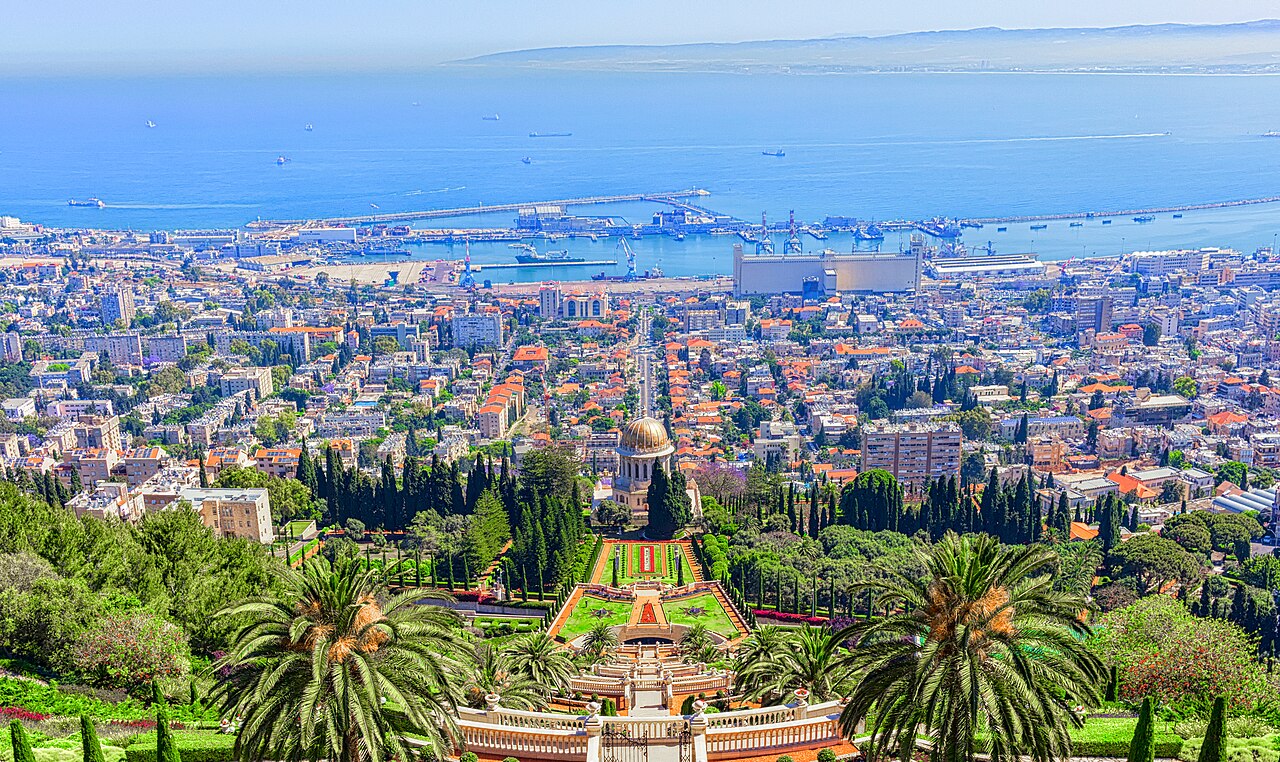
A landscape with religious meaning
The Bahá’í gardens are among the most recognisable views of Haifa, but they are more than a scenic backdrop. The terraces surround the Shrine of the Báb, a sacred place of the Bahá’í Faith. Near Akko, the gardens at Bahjí surround the Shrine of Bahá’u’lláh, the religion’s founder. Understanding this distinction helps visitors appreciate two different places within one religious and historical landscape.
The terraces of Haifa
Nineteen terraces extend along the northern slope of Mount Carmel. Their carefully arranged paths, planting and geometric forms create a strong visual connection between mountain and bay. The golden-domed shrine occupies a central place in the composition. Different viewpoints reveal different parts of the gardens, and access to a viewpoint does not necessarily mean access to every terrace or the shrine. Use the official visiting information to understand the available routes.
Bahjí near Akko
The gardens near Akko have a different character from the steep urban terraces of Haifa. The setting around the Shrine of Bahá’u’lláh is associated with pilgrimage, reflection and the later life of the founder of the faith. A visit can complement a day in the Akko area, but the site is separate from the old harbour and Crusader remains. Allow time for the journey and follow the published visitor arrangements.
Respectful visiting
These are maintained religious sites rather than ordinary municipal parks. Modest dress, quiet behaviour and compliance with staff instructions help preserve the atmosphere. Routes, reservation requirements and opening arrangements may change. Photography rules can also differ between outdoor gardens and sacred interiors. The official Bahá’í gardens website is the right source for these details; an attractive image on social media is not an access permit.
What makes the gardens distinctive
The appeal lies in the relationship between religious meaning, horticulture and urban landscape. From Haifa, the geometry of the terraces frames the bay; at Bahjí, the garden setting encourages a different pace. UNESCO’s entry explains the significance of the Bahá’í holy places in Haifa and western Galilee. Read it alongside the official site to connect the beauty of the visit with its historical and spiritual context.