Nazareth: Faith, Food and a Living Galilee City
More than a pilgrimage stop
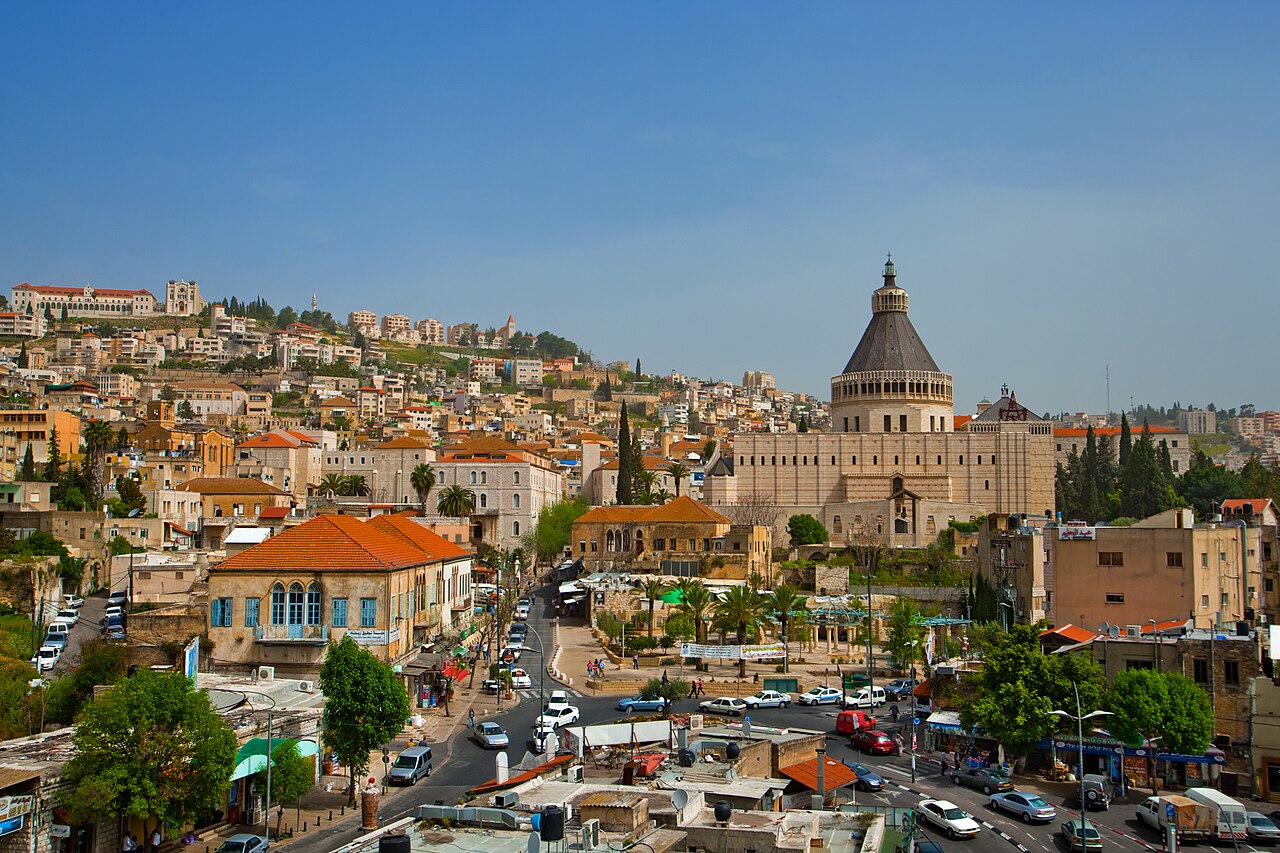
Nazareth is associated around the world with the childhood of Jesus and with Christian traditions of the Annunciation. It is also a contemporary Arab city with Muslim and Christian residents, shops, schools and family life. Its interest lies in bringing these perspectives together. A visitor can encounter important religious monuments and then discover the texture of the city through food, streets and conversations.
Churches and religious traditions
The Basilica of the Annunciation is a major landmark, while other churches express different Christian traditions connected with the city. Religious significance and archaeological interpretation are related but not identical. Read the explanations offered at each site and give services priority over sightseeing. Modest dress and quiet behaviour are appropriate, and photography should follow local instructions rather than assumptions based on other churches.
Markets and the older streets
The old city’s lanes and buildings offer a different pace from the main roads. Food shops, bakeries and cafés can form the basis of a relaxed walk. Look for the everyday city as well as the famous viewpoint. Not every stall, restaurant or church follows the same weekly schedule, so avoid assuming that one general statement about Nazareth applies to every business or religious institution.
Food as part of the visit
A meal can introduce local culinary traditions and the relationships between a city and its surrounding region. Choose time to sit and eat rather than treating food as a quick break between monuments. Markets also provide an opportunity to observe seasonal produce and ordinary shopping. Be considerate when photographing workers or customers, and ask questions without expecting residents to act as tour guides.
Making time for Nazareth
Half a day may introduce the main streets and one or two religious sites, while a longer stay allows a less hurried encounter. The surrounding hills and regional journeys need their own planning. Consult visitor information and the municipality for current arrangements. Wikipedia’s references can help distinguish the city’s ancient associations, Ottoman development and modern history.