
City of David in Jerusalem: archaeology beneath a living city
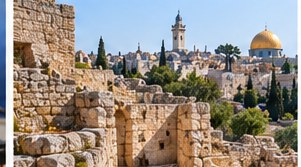
Where the archaeological site is
The City of David refers to the archaeological area on the southeastern ridge of ancient Jerusalem, immediately south of the Temple Mount/Haram al-Sharif. The area overlaps with Silwan, a living Palestinian neighborhood of East Jerusalem. For Jewish history it is strongly associated with accounts of King David and the early royal city; for archaeology it is a complicated multi-period site with remains from the Bronze and Iron Ages through later periods. These are related but not identical ways of describing the place.
Water and the Gihon spring
One reason the ridge mattered in antiquity is the Gihon spring, an essential water source for early settlement. Excavations have revealed major fortifications and water installations, while Hezekiah’s Tunnel and other systems are associated with attempts to secure water supply. Archaeologists investigate how people reached and protected springs, how walls developed and which remains belong to different centuries. Interpretations change as excavation methods, dating and comparative evidence improve.
The stepped street and Givati excavations
The Israel Antiquities Authority reports extensive work since the 1990s, including excavations directed by Ronny Reich and Eli Shukron, the Stepped Street from the early Roman period and the Givati Parking Lot area. The street connected the Pool of Siloam toward the Temple Mount. Finds include fortifications, streets, drainage systems, ceramics and other objects that reveal changing urban life. Visitors should distinguish actual excavated structures from reconstructions intended to help the public imagine the past.
Archaeology and political disagreement
The excavations are intensely contested because they take place in East Jerusalem and near homes in Silwan. Supporters emphasize the significance of ancient Jerusalem’s heritage and the value of new discoveries; critics question how tourism, settlement organizations, property claims and excavations affect Palestinian residents. UNESCO discussions reflect some of these disputes. Responsible interpretation should acknowledge both the material evidence and the contemporary community living above and beside it.
Visiting and reading critically
The site can be approached as a layered landscape rather than proof of a single political claim. Archaeology provides data about walls, water and everyday objects, but texts and interpretations are debated. Check accessibility and opening arrangements on official sites, respect residential streets, and compare explanations from the Israel Antiquities Authority with academic archaeology and local perspectives. Such an approach makes ancient Jerusalem more interesting and more accurate.
Sources and references
- Israel Antiquities Authority: history and excavations
- UNESCO: Jerusalem documents
- Wikipedia: City of David
Editorial update: 25 October 2026.