
Hanukkah: eight nights of lights and memory
The story behind the lights
Hanukkah commemorates events associated with the Maccabean revolt against Seleucid rule and the rededication of the Jerusalem Temple in the second century BCE. Later rabbinic tradition recounts the miracle of a small supply of consecrated oil lasting eight days. These historical and religious strands are not identical: the ancient political struggle and the oil narrative developed through different sources. Both contribute to the holiday’s modern meaning in Jewish homes.
Lighting the hanukkiah
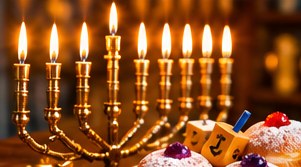
During eight nights, households kindle lights in a nine-branched hanukkiah, using the helper candle called the shamash. The number of lights increases each evening, while the blessings and customs differ somewhat by community. The ritual is often placed where it can be seen from outside, emphasizing public remembrance. In Israel, public menorah lightings appear in squares, schools and workplaces, alongside family observances that may be intimate and quiet.
Food and games
Fried foods point to the symbolism of oil: sufganiyot doughnuts and potato latkes are especially familiar, although families keep many different regional recipes. Children play with dreidels, sing songs and may receive small gifts or holiday money. Commercial images of Hanukkah have grown more elaborate, but the core ritual remains the lighting of candles and shared memory. The festival does not require the same work restrictions as major biblical holidays.
History and contemporary interpretation
Some writers emphasize religious freedom and the survival of Jewish culture; others focus on the complicated history of the Hasmonean dynasty or on the relationship between political sovereignty and faith. Hanukkah cannot be reduced to a Jewish imitation of Christmas, even though it occurs in the winter season. Its calendar is determined by the Hebrew month of Kislev, so dates move relative to the Gregorian calendar.
Celebrations in Israel
In Israeli cities one can see school ceremonies, street decorations, community music and many bakery windows filled with doughnuts. Religious and secular citizens may celebrate differently, but the festival is widely recognized across society. For visitors, its most memorable feature may be ordinary windows with small lights appearing after dark. It is a holiday where private ritual and public space meet.
Sources and references
Editorial update: 25 October 2026.