Hebron attack, 23 October 2026
Editorial update: 26 October 2026
Historical context
This overview examines the historical background, major events and ongoing significance of Hebron attack, 23 October 2026. It distinguishes documented facts, competing accounts and unanswered questions, and points readers toward academic and primary sources.
What happened on 23 October
On Friday 23 October 2026, a shooting occurred near Yehuda Junction outside Hebron in the occupied West Bank. According to the Israeli military as reported by Associated Press, two Israeli soldiers were killed: Staff Sergeant Ron Yonatan Roytman, aged 23, and Sergeant Yuval Shai Svilem, aged 20. Three other soldiers suffered light injuries. Two suspected Palestinian attackers were also killed in an exchange of fire. The incident took place three days before Israel's 27 October parliamentary election. The location matters: Hebron lies in the West Bank, which is not internationally recognized as part of sovereign Israel; it should not be described simply as an attack inside Israel.
Initial sequence and evidence
The military said two armed men arrived at a position near Yehuda Junction and fired at Israeli personnel. An exchange of gunfire lasted approximately twenty minutes, according to contemporary reports quoting the army. Investigators said an M16 rifle and a handgun were involved. These details come from the Israeli military's account as relayed by news organizations; they are not equivalent to a completed independent criminal investigation. The identities, motives and organizational ties of participants must be assessed as evidence becomes available. No established link to the Palestinian Authority was reported by the Associated Press in its immediate coverage.
The dead and the wounded
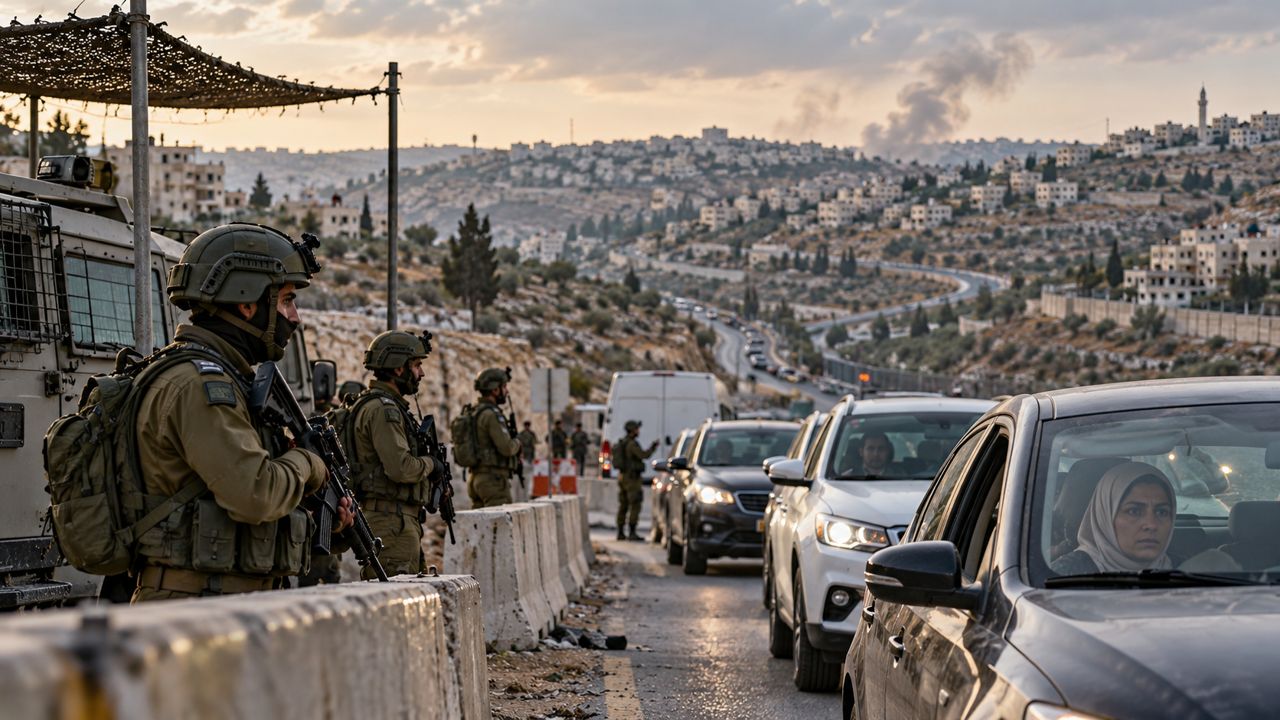
The two soldiers who died have been identified by name and age in reports from the Israeli military and independent news agencies. Their deaths are the central confirmed human loss in the event, in addition to the two suspected attackers killed in the confrontation. Three other Israeli soldiers were reported lightly injured. Responsible reporting should not confuse the death toll with injuries or mix the separate victims of other incidents. Photographs linked from news reports show emergency personnel and the surrounding area; generic pictures used on this website are clearly marked as context illustrations and do not purport to depict the actual scene.
Security response and political context
Following the attack, Prime Minister Benjamin Netanyahu ordered an expanded security response, including restrictions in and around Hebron. Security forces carried out searches and arrests; Israel's military announced on 25 October that the attackers' homes had been sealed ahead of possible demolition. Such measures have significant consequences for Palestinian civilians, and their necessity and lawfulness are contested. The incident also influenced political discussion just before the Knesset election, during which security policy and public trust in government leadership were prominent issues.
How to follow verified updates
Associated Press and the Jerusalem Post published contemporaneous reports, and readers can compare their coverage with Israel Defense Forces statements and humanitarian monitoring by the United Nations. Events may be reassessed when evidence changes. This article is dated 26 October 2026 and does not claim to describe later developments. The names of the victims, their ages, the date, and the location are presented separately from allegations concerning motive and responsibility. Respect for the bereaved is compatible with careful scrutiny of military actions taken in response.
Images and context