
Israel and global arms exports: SIPRI 2021–2025
A major exporter but not the largest
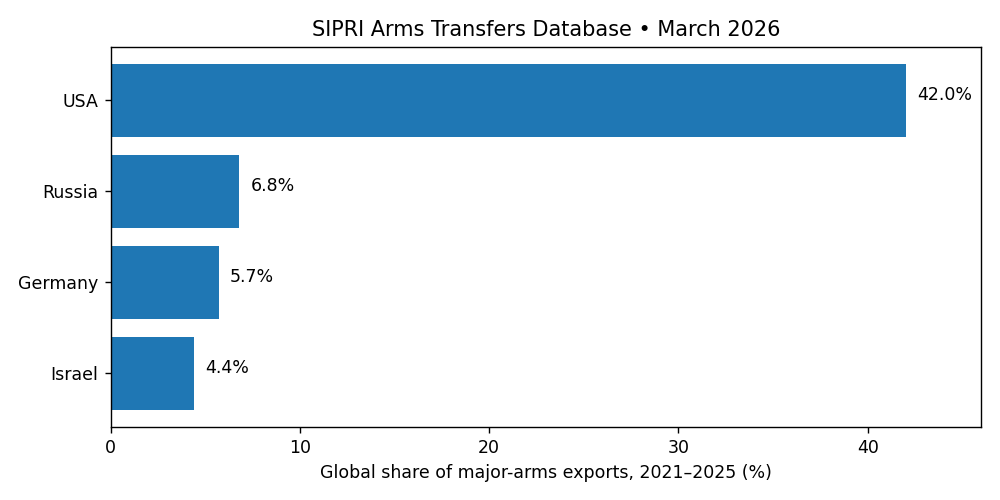
The Stockholm International Peace Research Institute (SIPRI) ranks Israel seventh among suppliers of major arms for 2021–2025, with 4.4 percent of the measured worldwide transfer volume. The United States accounted for 42 percent, Russia 6.8 percent and Germany 5.7 percent over the same period. These percentages represent SIPRI transfer-volume indicators, not actual invoice revenue in dollars or euros.
What Israel exports
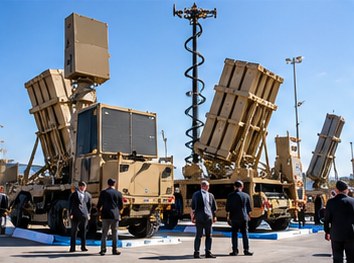
Israeli manufacturers supply air-defense systems, missiles, sensors, radar, drones, electronic systems and other equipment. Demand for air defense has been strong in recent years. Many systems involve multinational supply chains and licensing, so the country of export is not always the country where every component was produced.
Why comparisons need care
SIPRI’s measure tracks transfers of major conventional weapons using a trend-indicator value. It is designed for comparing deliveries over time, not comparing company profits or national defense budgets. Israel’s 4.4 percent share rose from 3.1 percent in 2016–2020, while Russia’s share declined sharply. The chart here compares the same methodology and period for all four countries.
Ethical and political debate
Arms exports are a strategic and economic issue, but they also raise questions about end use, civilian protection and international law. Israel is both a major exporter of selected systems and a large importer of other categories of weapons, mainly from the United States and Germany. An accurate account should discuss technological capacity together with the human-rights questions that accompany transfers into conflict areas.
Sources and further reading
Updated: October 2026
Different measures must not be confused
SIPRI uses a transfer-volume indicator for major conventional weapons, which is not the same thing as the dollar value of annual defence-company sales. Contracts, deliveries and technology transfers may also take place in different years. Any chart should state the period and method, rather than turning a percentage of global transfers into an unsupported sales figure.