
Druze citizens of Israel: religion, communities and service
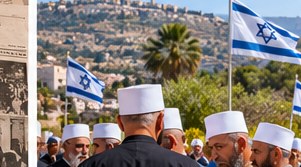
Who the Druze are
The Druze are an Arabic-speaking religious community with a distinct monotheistic tradition that emerged around the eleventh century from a historical milieu linked to Ismaili Islam. Druze religious doctrine is separate and largely closed to conversion; religious study is not equally accessible to all members. Many community members describe their identity through family, village ties and shared customs, though there are important personal and political differences. Druze people also live in Lebanon and Syria, not only in Israel.
How many live in Israel
Israel’s Central Bureau of Statistics reported approximately 154,369 Druze residents in preliminary figures for February 2026. Daliyat al-Karmel and Yirka were among the largest Druze localities, with about 17,700 and 16,400 Druze residents respectively at the end of 2024. The community also lives in the Galilee, on Mount Carmel and, under complex citizenship and residency circumstances, in the Golan Heights. Do not assume all Druze in these areas share the same nationality or political position.
Families and demographic change
Druze family patterns have changed markedly. The CBS reports a total fertility rate of 1.66 children per Druze woman in 2024, down from 7.92 in 1964. About 22.6 percent of the Druze population was aged 0 to 14 at the end of 2024, and approximately 39,000 households were Druze-headed in 2025. These figures challenge a stereotype that all Druze families remain uniformly large and rural. Education, employment and urban mobility have transformed daily life.
Military service and professions
Many Druze men who are Israeli citizens serve under the military conscription arrangements applicable to the community, and Druze soldiers have held important positions in the IDF. Druze women are generally not drafted under the same arrangement. Service is meaningful for some families and contested or interpreted differently by others. Community members work in commerce, education, security services, medicine, technology, agriculture and tourism. There is no single occupation that defines Druze life.
Politics, faith and equality
The community has long raised issues involving municipal budgets, land-use planning, housing permits and equal treatment. The 2018 Nation-State Basic Law prompted protests among many Druze citizens who felt it weakened their civic standing. Cultural celebrations, religious visits and village hospitality coexist with these debates. Understanding the Druze requires taking both their distinctive faith and their full complexity as contemporary citizens seriously.
Sources and references
Editorial update: 25 October 2026.