
Jüdische Allgemeine: a German-language Jewish newspaper
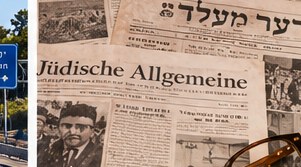
A history longer than its present title
The Jüdische Allgemeine is one of the most important German-language Jewish newspapers. It presents itself as heir to a tradition reaching back to the Allgemeine Zeitung des Judenthums, founded in Leipzig in 1837. The Nazi dictatorship destroyed Jewish publishing life; it is therefore essential not to describe today’s newspaper as a continuous unchanged publication since 1837. The modern postwar institutional history began in 1946, when Jewish community journalism restarted under British military authorization.
After 1945: rebuilding the press
A predecessor of the present newspaper was established in Düsseldorf as the Jüdisches Gemeindeblatt für die Nord-Rheinprovinz und Westfalen. Subsequent titles and editorial organizations developed as Jewish communities rebuilt in the Federal Republic. The Zentralrat der Juden in Deutschland connects that trajectory to the Allgemeine Jüdische Wochenzeitung. Since 2002 the publication has used the title Jüdische Allgemeine. Its history reflects displacement, survival and the difficult reconstruction of Jewish public life after the Shoah.
What the weekly covers
The newspaper reports on Jewish communities in Germany, Israel, world affairs, religion, remembrance, culture, schools, social policy and antisemitism. It carries interviews, commentary, arts reviews and reporting on the everyday diversity of Jewish life. Editorial positions are not the same as the views of every Jewish resident in Germany; the paper is a significant forum within a plural community. Its German language connects long-standing traditions with readers from many different family backgrounds.
Berlin and the digital era
The editorial operation moved with the Central Council’s relocation to Berlin in 1999. The weekly print format is supplemented by online journalism and social media. A media-data page records a relaunch and design awards and describes the historical link to earlier Jewish newspapers. Digital publication makes stories accessible to younger readers and to people outside Germany, but it also exposes the outlet to the broader pressures facing newspapers, from changing revenue to online hostility.
Why it matters today
Jewish journalism is part of democratic pluralism because it gives a public platform to minority institutions without reducing them to outsider descriptions. The Jüdische Allgemeine chronicles communities, criticizes political decisions, discusses Jewish identity and documents antisemitic incidents. Reading it alongside other Jewish, Israeli and German media is a useful way to learn not only what happens to Jewish people, but what Jewish journalists themselves choose to investigate.
Sources and references
Editorial update: 25 October 2026.