
Ma’agan Michael: the coastal kibbutz and its history
Editorial reference date: 26 October 2026
A coastal kibbutz founded in 1949
A living residential community
Population figures are not fixed rankings: kibbutzim differ in their legal and municipal boundaries, and the number of registered residents can change from year to year. Ma’agan Michael is therefore best described as one of the country’s larger kibbutzim. Its coastal setting, industry, agriculture and environmental surroundings belong together in understanding its recent history. Visitors should respect residential privacy and any restrictions around the shore, work sites and fields.
Ma’agan Michael was established on 25 August 1949 on Israel’s Mediterranean coast, south of Haifa and north of Hadera. Its founders came from the Hebrew Scouts movement and sought to combine communal settlement, agriculture and a maritime livelihood. The name refers both to an anchorage and to Michael Pollack, a benefactor linked with the Nesher cement industry. The kibbutz belongs to the Hof HaCarmel Regional Council.

Industry and collective work
Ma’agan Michael became known for its combination of agriculture and modern industrial activity, including the Plasson plastics enterprise. Over time the economy diversified and the kibbutz developed an unusually strong industrial base. The collective model changed in some practical details as Israeli society transformed, yet community institutions, shared services and its distinctive local identity remained important.
Families, population and landscape
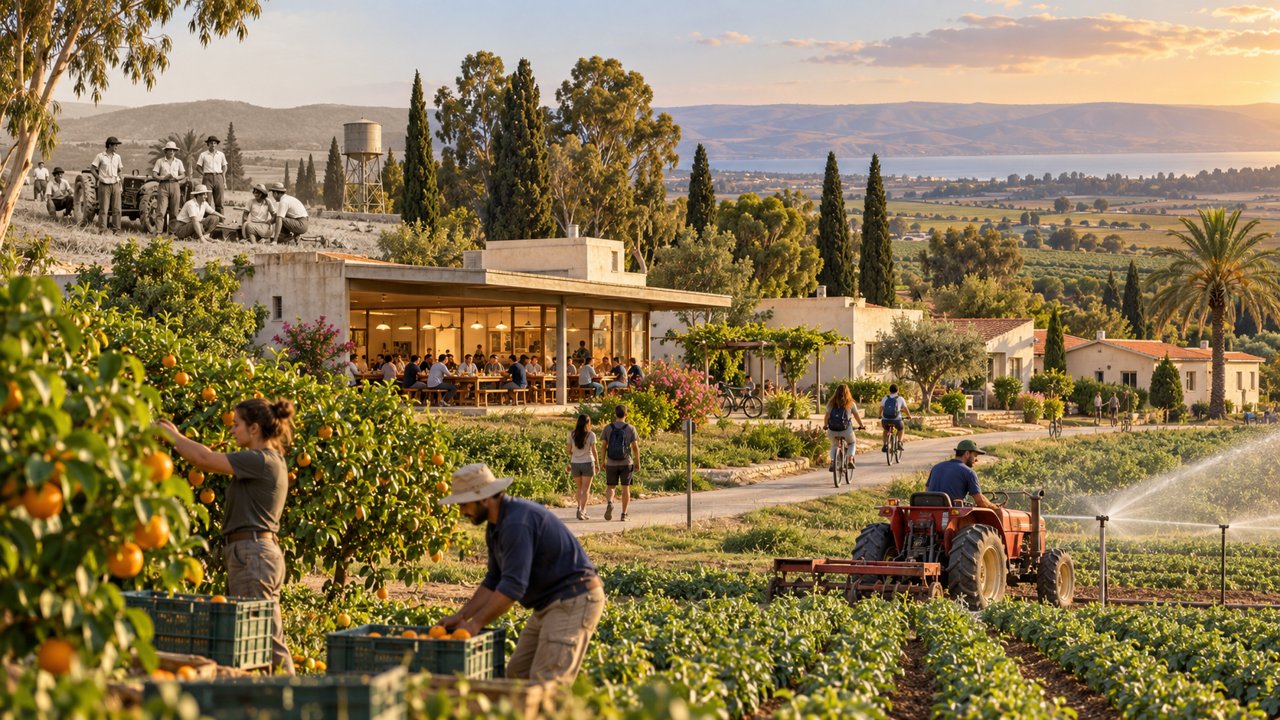
According to published demographic information, the population was approximately 2,093 in 2024, making Ma’agan Michael one of Israel’s larger kibbutzim. It should be described as among the largest rather than categorically the single largest in every year, since populations and boundaries change. Its landscape includes lagoons, ponds, fields and coastal habitats near the Taninim stream, creating links between economic life and environmental stewardship.
Education, culture and the kibbutz model
As in many Israeli kibbutzim, communal festivities and education have had a significant place in social life. The history of Ma’agan Michael illustrates how an early Zionist settlement combined ideals of cooperative living with practical adaptation and modern industry. Visitors should respect residential privacy and access restrictions around agricultural and coastal infrastructure. The kibbutz is a living community, not simply a tourist attraction.