
Shimon HaTzadik: a Jerusalem pilgrimage tradition
The figure behind the name
Shimon HaTzadik, or Simeon the Just, is a revered Jewish figure associated in rabbinic tradition with the Second Temple and the Great Assembly. The best-known saying attributed to him in Pirkei Avot teaches that the world rests on Torah, worship and acts of kindness. Historical identification of the ancient high priest with particular figures in Greek and Jewish sources remains debated. Religious memory is therefore important, but it should not be confused with an unbroken archaeological chain of proof.
The Jerusalem tomb tradition
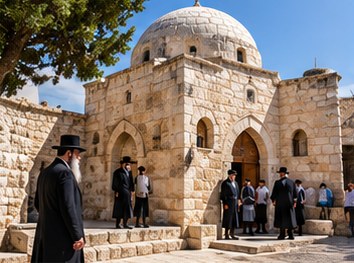
A site in the Sheikh Jarrah area of East Jerusalem is venerated by many Jews as the tomb of Shimon HaTzadik. Pilgrims come to pray, recite psalms and participate in religious gatherings. Over time the shrine has acquired its own devotional life and associations with family celebrations. Pilgrimage practices vary from community to community and may intensify around certain commemorative dates.
Faith, geography and a contested neighborhood
The surrounding neighborhood is also a focus of Israeli-Palestinian housing and property disputes. It is important not to describe the religious site as if it existed outside contemporary Jerusalem. For worshippers it is a place of spiritual continuity; for local residents, land ownership and security issues can have immediate consequences. Responsible reporting should distinguish religious claims, documentary ownership arguments and modern court disputes.
Visiting with respect
The shrine can be approached as a place of living worship rather than a conventional museum. Visitors should respect prayer, local residents and any access restrictions. In writing about the location, spelling variants such as Shimon HaTzadik, Simon the Just and Simeon the Just can help readers find sources in Hebrew and English.
Sources and further reading
Updated: October 2026
Religious tradition and historical evidence
The tomb attributed to Shimon HaTzadik is an established place of pilgrimage and prayer, even though the precise archaeological identification should not be presented as beyond dispute. Its location within a politically sensitive urban environment also calls for respect for local residents and careful separation of religious custom from property and political disputes.