
Sukkot: the Jewish festival of booths and hospitality
A week under a temporary roof
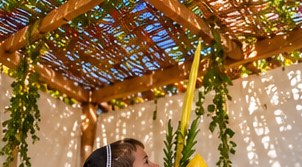
Sukkot begins on the fifteenth day of the Hebrew month of Tishrei, following Yom Kippur. The Torah connects the festival with the Israelites’ wilderness journey and with the annual harvest. Its most visible sign is the sukkah, a temporary booth, traditionally covered with natural roofing through which the sky may be seen. In Israel, balconies, gardens, courtyards and community spaces fill with these constructions, giving the streets a distinctive seasonal appearance.
The four species
Religious observance includes taking the four species: an etrog citron, a lulav palm frond, hadassim myrtle branches and aravot willow branches. Their combination is waved during prayers according to Jewish custom. Shops and special markets sell the species before the holiday, and families compare quality and tradition. The practice is one of the clearest examples of how a religious text becomes a living, material ritual with smell, texture and movement.
Meals and guests
Many families eat meals in the sukkah and some sleep there, depending on their practice and local conditions. Hospitality is central: inviting neighbors, relatives or people who would otherwise be alone creates a holiday of shared tables. Schools teach children to make decorations; communities offer public celebrations, music and teaching. For non-observant Israelis, Sukkot may still mean holidays, travel and family gatherings, though religious observance varies considerably.
Meaning and interpretation
The temporary dwelling is commonly understood as a reminder that permanence and possessions are fragile. At the same time, the festival is joyful rather than gloomy. The image of leaving a solid house for a simple booth makes vulnerability visible while emphasizing trust, gratitude and community. Commentators connect Sukkot with care for strangers, sustainable living or awareness of nature; these are interpretations alongside the traditional halakhic framework.
Sukkot in present-day Israel
Municipal events and synagogue services take place alongside private family practice. Public transport and business hours can differ on the first festival day, intermediate days and the closing festival. Visitors should check schedules rather than assume the whole week follows identical rules. The festival closes with Shemini Atzeret and Simchat Torah observances, which in Israel take place together on one day. These are related but not simply interchangeable names for the seven days of Sukkot.
Sources and references
Editorial update: 25 October 2026.