
Yuri Foreman: Boxer, world champion and Orthodox rabbi
Biography · Boxing · Jewish life
A life between three countries and two disciplines
Yuri Foreman's career is more than a sequence of boxing matches. Born on 5 August 1980 in Gomel, in what was then Soviet Belarus, he grew up as a Jewish immigrant in Israel and later built his professional career in New York. In November 2009 he became world champion in the super welterweight division of the World Boxing Association. He subsequently completed religious studies and was ordained as an Orthodox rabbi in 2014. These two achievements are often presented as an entertaining paradox, but for Foreman they belong to a continuing story about identity, perseverance, and the search for meaning. His biography opens a window onto Jewish immigration from the former Soviet Union, the place of combat sports in Israeli society, and the possibilities for religious commitment outside conventional professional roles.
Childhood in Gomel and the experience of antisemitism
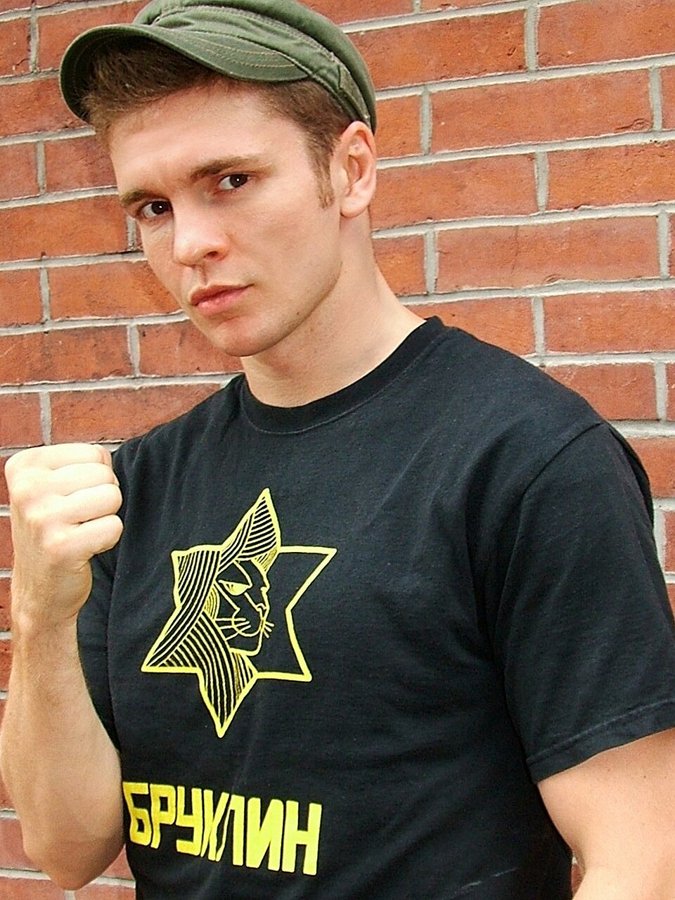
Foreman grew up during the final decade of the Soviet Union, when Jewish families could experience social discrimination despite the state's official language of equality. Interviews with the boxer describe being bullied because he was Jewish. His mother introduced him to boxing when he was young so that he could protect himself. A child's response to hostility did not determine the shape of his later career, but it gave his training an immediate personal significance. Learning to move, maintain balance, control fear, and defend himself was a way of developing confidence. It would be simplistic to interpret every later victory as revenge against childhood bullies. Yet the experience helps explain why he repeatedly spoke about self-belief and discipline. Boxing was a practical skill before it was an international profession.
Immigration to Haifa and finding a place in Israel
Foreman's family moved to Israel during the great immigration from the former Soviet Union around 1990. They settled in Haifa, a city shaped by migration, industry, universities, and communities with different languages and backgrounds. Integration was not automatic. Young arrivals had to learn Hebrew, negotiate unfamiliar customs, and find their place at school. Foreman later described the painful difference between being identified as Jewish in the Soviet Union and being viewed as Russian in Israel. This is an important dimension of his story: immigration changes someone's legal home without instantly eliminating the questions of belonging and acceptance. He continued training in Israel, where boxing occupied a smaller place in public sporting culture than football or basketball. He also found training partners and mentors among Arab boxers. Accounts of these formative years show how shared athletic work could cross community boundaries even when social relations outside the gym remained complicated.
A serious amateur career and the journey to Brooklyn
Foreman competed in amateur boxing and accumulated experience in national and international events. He ultimately left for the United States in 1999 because New York offered a broader network of gyms, trainers, opponents, promoters, and professional opportunities. The move was another migration, requiring the same willingness to start from uncertainty that had marked his arrival in Israel. In Brooklyn he trained at Gleason's Gym, an institution associated with generations of championship boxers. He won the New York Daily News Golden Gloves open title in 2001. The Golden Gloves are an amateur achievement, not a professional world championship, but their importance lies in the highly competitive local boxing culture they represent. Foreman developed as a technical boxer who used distance, movement, timing, and organization rather than relying solely on punching power. This strategic approach would matter greatly in his championship performance.
Entering professional boxing
Foreman turned professional in 2002. Professional boxing tests more than technical competence: a fighter must recover between bouts, manage weight, maintain conditioning, work with trainers, and remain calm while facing a succession of opponents with differing styles. The boxer also relies on a team that includes managers, corner personnel, medical professionals, and supporters. Foreman's rise was gradual rather than the product of a single spectacular knockout. His record developed through decisions as well as stoppages. In the super welterweight division, approximately 154 pounds or 69.9 kilograms, footwork and defensive reading can be decisive against physically strong opponents. Foreman earned his opportunity to fight Daniel Santos because years of consistent performances had made him a legitimate contender. Boxing's multiple sanctioning bodies and belts can make championship terminology confusing; the relevant title in this case was the WBA super welterweight championship.
The historic night against Daniel Santos in 2009
On 14 November 2009, Foreman faced Puerto Rican boxer Daniel Santos in Las Vegas. After twelve rounds the judges awarded Foreman a unanimous decision, and he won the WBA super welterweight world title. This was a defining moment in his sporting career and an important symbolic event for Israeli boxing. Contemporary reporting described him as the first Israeli to win that particular WBA world title. It would be inaccurate to suggest that Israel had never produced any other world boxing champion under another organization. One detail attracted special attention: the bout took place after the end of Shabbat, allowing Foreman to accommodate his growing religious observance. The victory was achieved not by abandoning his professional life, but by coordinating training, competition, and religious priorities. Photographs from the period show a boxer whose public identity included an Israeli flag and a Jewish background.
The title defense against Miguel Cotto
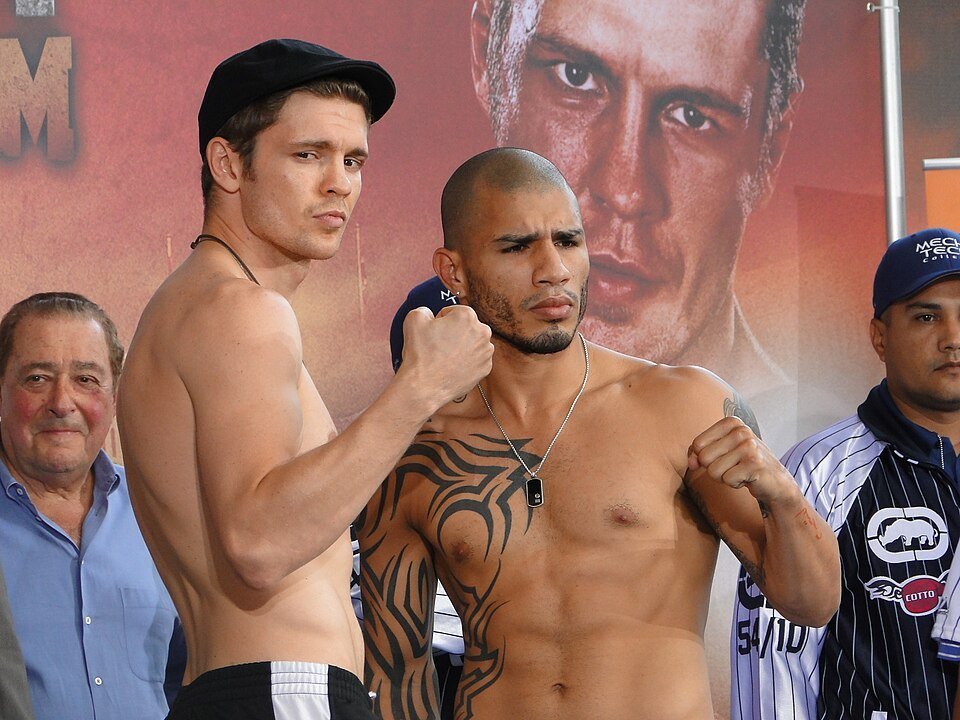
A championship brings obligations and exposure, and Foreman's first defense was unusually demanding. On 5 June 2010 he faced Miguel Cotto at Yankee Stadium in New York. The event drew wide attention as a major boxing occasion in the stadium. Foreman entered with a knee problem, and during the fight the injury became a central issue. His movement was severely affected. In the eighth round a towel was thrown from his corner, but referee Arthur Mercante Jr. allowed the contest to continue after determining that Foreman wanted to fight on. Cotto eventually won by technical knockout in the ninth round. The unusual sequence became part of boxing history, but it also raises serious questions about athletic courage and medical safety. Determination deserves respect; it should not obscure the responsibilities of referees, corners, and event officials when a participant is injured. Foreman's loss did not erase his earlier championship, nor did it reduce his career to a single dramatic scene.
Jewish identity and the search for religious study
Long before he received ordination, Foreman began investigating Jewish traditions more deeply. His life in Brooklyn exposed him to a variety of Jewish communities and educational environments. He encountered Rabbi DovBer Pinson, associated with the IYYUN Institute, and started studying texts and religious philosophy. The progression was gradual. Jewish identity acquired through family history and migration was joined by chosen daily practice: learning, prayer, questions about religious obligations, and participation in communal life. His interest included Talmud and Jewish mysticism. Foreman's story should not be read as a claim that every Jew must become Orthodox or that sporting excellence necessarily leads to religious belief. Rather, it illustrates how a person who once felt distanced from Jewish institutions could enter a serious course of religious education while remaining active in the secular world of professional sport.
Studying for rabbinical ordination
Rabbinical ordination, commonly called semicha, is not identical across all Jewish movements and institutions. Within Orthodox settings it generally involves sustained study of Jewish law, traditional texts, and practical religious questions under recognized teachers. Foreman's studies were reported for several years before he received ordination in 2014. Journalists understandably concentrated on the image of a boxer studying religious law, but the work involved a considerable investment of time. A rabbi's vocation can include teaching, interpreting sources, helping community members, and offering guidance. It is not necessarily a salaried pulpit position in a synagogue. Describing Foreman as an ordained Orthodox rabbi is supported by Jewish press reporting; describing him as the religious leader of a particular congregation would require separate evidence. This distinction matters in responsible biographical writing.
Can professional boxing and religious observance coexist?
The apparent contradiction between boxing and rabbinical life lies partly in stereotypes. People may expect a rabbi to work solely in study halls, and a boxer to think solely about physical confrontation. Jewish tradition, however, also discusses the body, health, the responsible use of strength, and the moral demands of ordinary occupations. At the same time, boxing is not morally uncontroversial. Repeated blows to the head and the risk of long-term neurological injury prompt substantial medical and ethical debates. Foreman's own belief that training and religious discipline can reinforce one another does not settle every halachic or medical question. His story is better understood as an individual negotiation of competing responsibilities. A critical biography can recognize both the sincerity of his faith and the real risks inherent in his sport.
Return fights and later career
After losing the belt, Foreman did not disappear immediately from boxing. He faced setbacks and periods away from competition, and later returned to the ring. In December 2015, after a lengthy absence, he defeated Lenwood Dozier at the Barclays Center in Brooklyn by unanimous decision. This return attracted attention precisely because he was already an ordained rabbi. In January 2017 he challenged Erislandy Lara for a world title but lost by knockout in the fourth round. The outcomes show that the sporting career did not follow a simple narrative of uninterrupted triumph. Athletes age, opponents change, and injuries leave consequences. A mature account should avoid inventing a retirement date, an official current position, or new fights without records. What can be documented is an unusual long-term association with boxing that continued after his transition into rabbinical work.
A Jewish and Israeli story, not a simple slogan
Foreman's path traverses Belarus, Israel, and the United States. Each contributed something different: the childhood experience of minority identity, the challenge of integration into Israeli society, and the professional and religious institutions of New York. His biography also challenges the idea that a person's nationality, language, profession, and religious practice must fit a single predictable category. He has been described as Belarus-born, Israeli, a Brooklyn boxer, and an Orthodox rabbi. These descriptions can all be true without making one of them the sole explanation for his achievements. His relationships with fellow athletes from different backgrounds are also a reminder that daily cooperation can exist even amid political conflict. The story is best told through verifiable events rather than sweeping claims about an entire people or religion.
The meaning of his example today
Yuri Foreman is remembered first in sports records as a WBA world champion of 2009 and in Jewish biographical reporting as a man ordained to the Orthodox rabbinate in 2014. His public significance lies partly in the combination, but also in the demanding routes to each achievement. He did not become a champion merely because he was religious, or a rabbi because he had been a champion. Both demanded sustained learning and the ability to recover from setbacks. For readers interested in Israel, Jewish migration, religious pluralism, or the social history of sport, his life provides an unusually concrete case study. It asks how identity is formed through experiences across borders, how professional ambition can coexist with a spiritual search, and why resilience should be described without romanticizing injury or violence.