
Hummus: chickpeas, tahini, pita and a shared regional dish
A dish with many homes
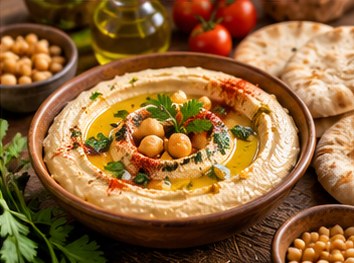
Hummus is made from cooked chickpeas blended with tahini, lemon juice, garlic and salt, usually served with olive oil and optional spices. It is a traditional food across the Levant and other parts of the Middle East, including Palestinian, Lebanese, Syrian, Jordanian and Israeli food cultures. Its exact historical point of invention is debated; assigning exclusive ownership to one modern nation would erase its shared regional history.
How people eat it
In Israel and neighboring countries hummus may be a breakfast, lunch or early-afternoon meal rather than merely a dip. A plate may come with warm pita, pickles, onion, hot sauce and extra chickpeas or fava beans. Many diners tear pita by hand and scoop from the communal plate. A fresh hummus shop often closes when its daily batch sells out.
Why it became international
In recent decades supermarkets in Europe and the United States have added an expanding range of packaged hummus, sometimes with roasted peppers, herbs or other flavors. This has broadened interest in chickpeas, tahini and plant-based spreads, though supermarket varieties differ from freshly prepared bowls in texture and flavor. Israeli and Arab restaurants abroad have also contributed to the dish’s visibility.
Cost and home preparation
Prices differ strongly by country, neighborhood and serving size, so a single international hummus price is misleading. A local sit-down plate with pita may be far cheaper than a full meal in a tourist restaurant, while packaged hummus is often sold by weight. At home, soaked and thoroughly cooked chickpeas give a smooth texture; blending warm beans with good tahini, water, garlic, lemon and salt is a reliable starting point. Adjust seasoning slowly and finish with olive oil.
Sources and further reading
Updated: October 2026
A dish without one modern national origin
Hummus belongs to the broader Levantine food tradition and should not be described as the invention of a single present-day nation. Recipes vary from household to household. The cooked chickpeas, tahini, lemon and garlic can be adjusted to taste, and restaurants may serve the dish with warm pita, vegetables or whole chickpeas.