
The Jewish community of Helsinki and Finland
Editorial reference date: 26 October 2026
From imperial restrictions to permanent settlement
For centuries Finland belonged first to the Swedish realm and then, from 1809, to the Russian Empire. Jewish settlement became possible through the particular legal status of former soldiers serving in the Russian military and their families. These Jewish residents established a modest community in Helsinki and other garrison towns. Their families created institutions that survived Finnish independence and later political upheavals. Finnish Jews were granted full civil rights in 1918, after independence, a turning point in their relationship with the state.

A synagogue, school and everyday Jewish life
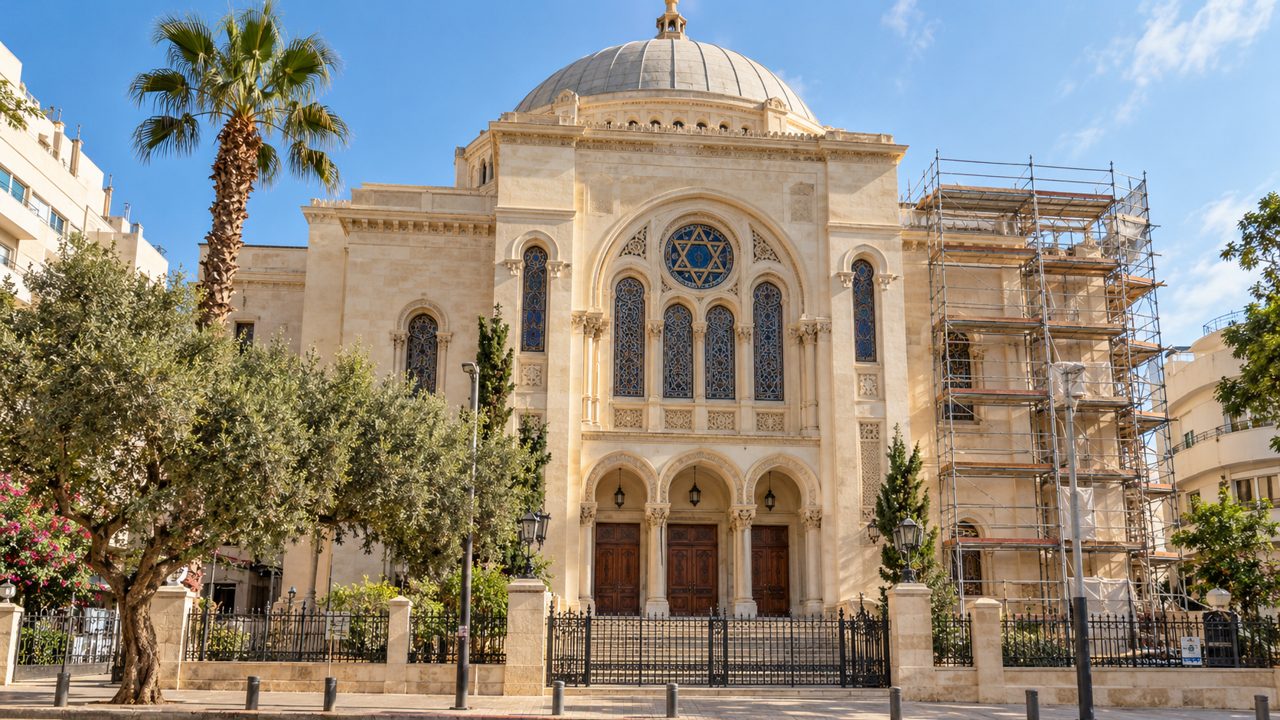
The Helsinki Synagogue was completed in 1906 on Malminkatu in the Kamppi district, to a design by Jac. Ahrenberg. The building also provided facilities for education and communal activities. Because the Jewish population is small, the same institutions often serve multiple purposes: religious services, Hebrew education, holiday celebrations, social work and encounters among generations. Families preserve Jewish identity in Finnish and Swedish-speaking surroundings while maintaining connections to Israel and wider European Jewish networks.
War, identity and public memory
Finland’s complicated Second World War history requires careful distinctions. Finnish Jewish citizens served in the Finnish armed forces even while the country was fighting the Soviet Union alongside Nazi Germany during the Continuation War. The Finnish Jewish community survived, but this does not erase the deportation of a small number of Jewish refugees or other uncomfortable historical episodes. Contemporary study examines military service, citizenship and the fate of refugees separately, rather than turning this history into a simple story of protection.
The community today
Fenno Judaica estimates that roughly 3,000 Jews live in Finland, concentrated mainly around Helsinki and, to a lesser extent, Turku. Membership of Jewish communities is lower than the total estimate, in part because not every Jewish resident formally affiliates. Traditional Orthodox congregations in Helsinki and Turku exist alongside progressive Jewish initiatives and Chabad activity. Immigration, mixed families and different styles of religious observance have diversified the community. The synagogue remains an important institution, but Jewish life extends well beyond worship into cultural events, family life, and public debate about minority rights.
A Finnish and European Jewish story
The community is small by international standards, yet it forms a lasting part of Finnish society. Its history includes questions of minority citizenship, religious freedom, education and languages. Its continued existence challenges the idea that meaningful Jewish life is limited to countries with large Jewish populations. Readers seeking up-to-date membership data should distinguish between census categories, registered congregants and broader demographic estimates.