
Rosh Hashanah: Jewish new year, shofar and traditions
26 October 2026 / 26. Oktober 2026
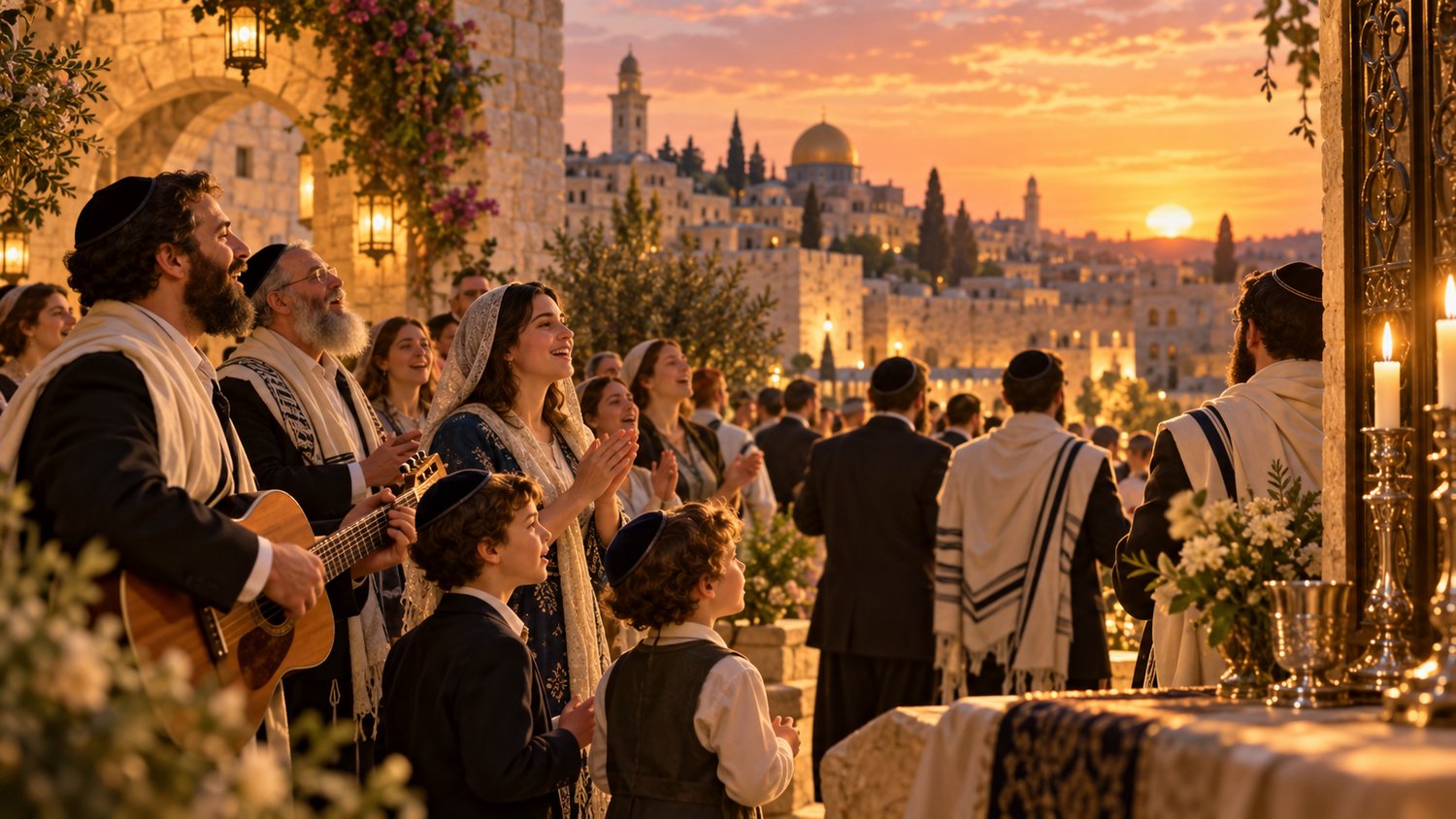
Rosh Hashanah begins the Jewish year on the first day of Tishrei and is observed for two days, including in Israel. Synagogue prayers, the shofar, apples with honey and symbolic foods express a wish for renewal. It begins a period of moral introspection leading to Yom Kippur.
Beginning of the Jewish year
Rosh Hashanah falls on the first and second of Tishrei and is observed for two days in Israel as well as in Jewish communities abroad. The Hebrew calendar combines lunar months with periodic adjustments to the solar year, so the festival’s date shifts on the Gregorian calendar. Unlike a purely secular celebration of a new year, the holiday joins family meals and hopes for sweetness with serious themes of judgment, renewal and accountability. It begins the ten Days of Repentance that lead to Yom Kippur.
Shofar, synagogue and liturgy
The shofar is a ram’s horn sounded in defined sequences during services, except that traditional law does not permit sounding it on Shabbat. Biblical and rabbinic texts connect its call to remembrance and awakening. Festive prayers emphasize divine kingship, memory and the moral choices of the coming year. The practice differs somewhat among Ashkenazi, Sephardi and other Jewish musical traditions. Synagogues may be crowded, and visitors should ask before photographing ceremonies or entering unfamiliar prayer spaces.
Food, symbols and the family table
Apples dipped in honey are a widely recognized sign of a sweet year, but they are far from the only traditional food. Round challah, dates, pomegranates, fish or its head, and other symbolic foods are used in many households. The precise menu varies between families from the Middle East, North Africa, Europe and beyond. Blessings and hopes are often expressed over the dishes. A festive meal is a place where children encounter family traditions and new immigrants bring additional customs to Israel’s diverse communities.
Reflection rather than prediction
The central issue of the holiday is not forecasting world events but preparing for better conduct. Families and individuals reflect on responsibilities toward relatives, neighbors and strangers. The ten-day period provides an opportunity to seek forgiveness and repair relationships. Tashlich, the symbolic casting off of wrongdoing near water, is practiced by many communities at a time determined by their custom. Some people attach philosophical significance to the ritual, while others see it as an occasion for community and shared memory.
Rosh Hashanah in contemporary Israel
Public offices and many shops close, while transportation services follow holiday restrictions. Families often travel before the festival, visit relatives or prepare large meals. Not all Israelis observe religious restrictions, and diverse levels of practice coexist. The two-day duration is notable because several other Jewish festivals last one day in Israel but two outside it. For accurate travel planning the local calendar, public-transport announcements and the date of Shabbat should all be checked. In 2026 Rosh Hashanah ran from sunset on 11 September through nightfall on 13 September.