
29 October 2026
Sigmund Freud, psychoanalysis and the museum in Vienna
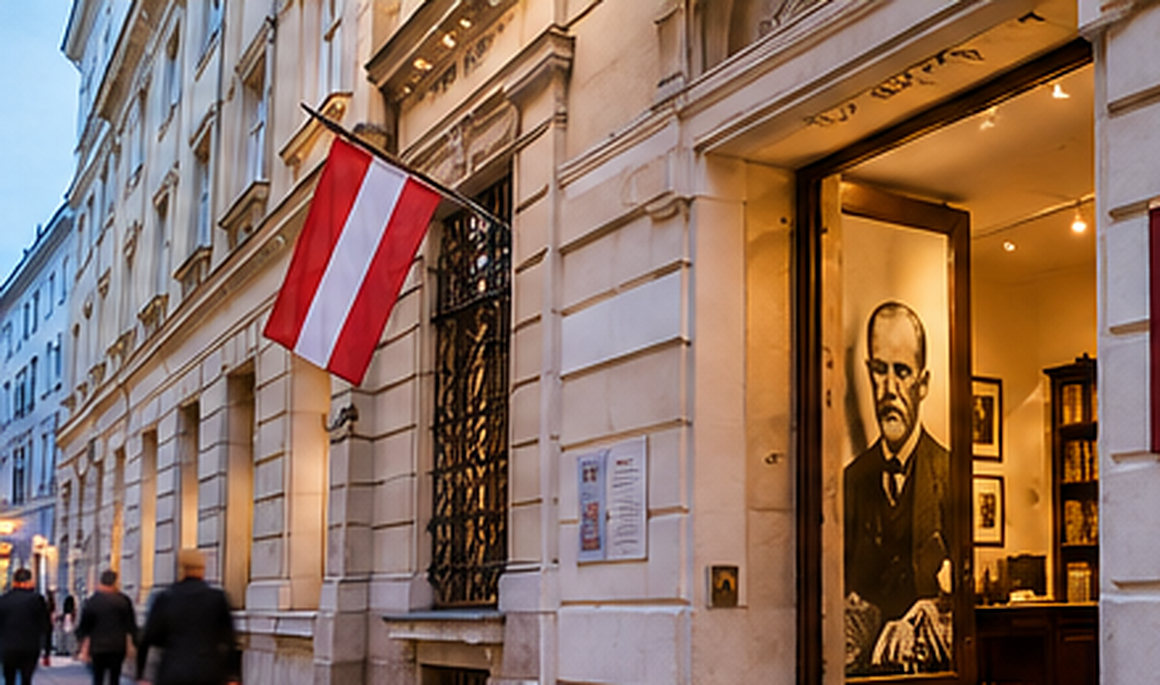
A Viennese address with a worldwide influence
Sigmund Freud was a neurologist, a writer and the founder of psychoanalysis. His work changed how many people describe memories, dreams, conflict, anxiety and human relationships. The most revealing place to explore his intellectual world is not a grand university building but an apartment house at Berggasse 19 in Vienna. Freud lived and worked there from 1891 until his forced departure in 1938. Today the Sigmund Freud Museum invites visitors to consider both the historical achievements and the disputed assumptions of his ideas. It also presents the story of a Jewish family whose life in Austria was destroyed by National Socialist persecution.
Jewish childhood and education
Freud was born on 6 May 1856 in Freiberg in Moravia, a town now called Příbor in the Czech Republic. His parents, Jakob and Amalia Freud, belonged to a Jewish family. The family moved to Vienna when Sigmund was still young, and he grew up in a city of remarkable cultural energy but persistent antisemitism. He attended school, studied medicine at the University of Vienna and became interested in the nervous system. His early research concerned anatomy and neurology rather than the interpretation of dreams. Understanding this scientific training helps explain why he hoped to formulate a systematic account of mental life, even when many of his hypotheses later proved difficult to test.
From neurology to talking therapy
In the 1880s Freud learned from the French neurologist Jean-Martin Charcot and worked with the Viennese physician Josef Breuer. Their encounters with patients whose symptoms could not easily be explained by visible physical injury prompted new questions about emotional experience. In 1895 Freud and Breuer published Studies on Hysteria. The book reflected the medical language of its period and should not be read as a description of present-day diagnostic categories. Freud gradually moved away from hypnosis and emphasized sustained conversation. Patients were invited to discuss troubling experiences, everyday recollections, apparently unrelated thoughts and emotional reactions without immediately censoring themselves.
Free association and the unconscious
The practice of free association became one of the defining tools of psychoanalysis. Freud believed that thoughts that appear accidental might reveal connections to memories, wishes or fears that people have trouble acknowledging. He described mental processes outside conscious awareness and argued that conflicts can shape behavior without being fully understood by the person involved. The general existence of unconscious mental processing is accepted in modern psychology, but this does not mean that every specific Freudian explanation has been verified. His clinical descriptions mixed observation, interpretation and theoretical speculation, so responsible readers should distinguish these layers rather than treat them as identical forms of evidence.
Dreams, books and an influential vocabulary
The Interpretation of Dreams appeared with the publication year 1900 and became the work most closely associated with Freud. He suggested that dream images could be explored through the dreamer's own memories and associations rather than fixed universal symbols. His later books examined slips of the tongue, jokes, mourning, religion, civilization and sexuality. Terms such as repression, resistance, transference and defense mechanisms entered public debate and often acquired meanings broader than their original clinical use. The famous model of id, ego and superego belongs to a later phase of his thinking. These concepts profoundly influenced literature and film even when their value as scientific explanations remained contested.
The patient and the therapeutic relationship
In Freud's account the relationship between patient and analyst was never merely a neutral exchange of information. Feelings associated with earlier relationships might reappear in treatment, a process he called transference. He also examined resistance, including situations in which a patient might avoid a painful subject. Modern psychodynamic therapies have revised these ideas and often work very differently from the classical setting of several sessions each week. Therapeutic effectiveness must be assessed through contemporary clinical research, not presumed from Freud's fame. His writings remain important for the history of psychotherapy, while patients today should seek qualified care based on their needs and the available evidence.
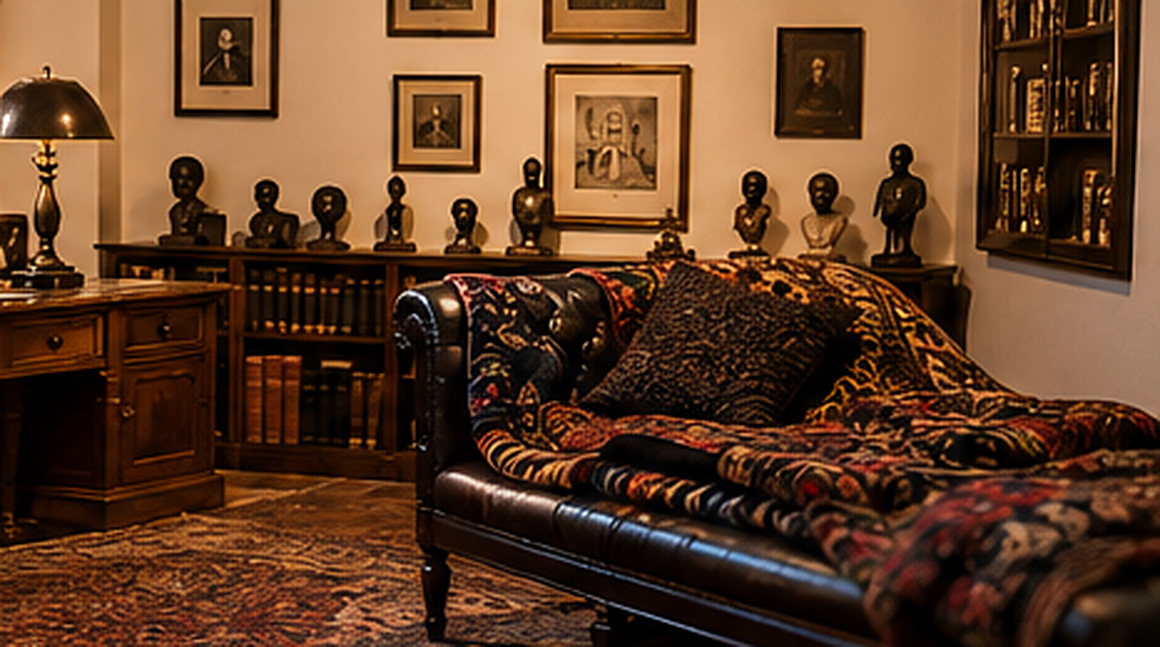
The circle at Berggasse 19
Freud did not develop psychoanalysis alone. Colleagues and students gathered in his waiting room, and the Wednesday Psychological Society became an important early discussion circle. Alfred Adler and Carl Gustav Jung were among the influential figures who later disagreed with him and pursued different theoretical directions. Women contributed significantly to psychoanalysis despite facing professional barriers. Freud's daughter Anna became a major figure in child psychoanalysis and the study of defense mechanisms. Their work demonstrates that psychoanalysis was never one timeless doctrine: it developed through arguments, institutional divisions, experiments, clinical experience and changing social expectations.
Jewish identity and persecution
Freud was secular in his intellectual outlook yet remained aware of his Jewish identity and the antisemitism around him. The place of Jewish thinkers in Central European science and culture is essential to his biography. After Nazi Germany annexed Austria in March 1938, the family faced escalating persecution. Freud's home and professional environment could no longer provide safety. With outside assistance, he and members of his immediate family left Vienna for London in June 1938. Four of his sisters were later murdered during the Holocaust. Freud died in London on 23 September 1939. The empty spaces and documents in the museum confront visitors with this rupture in European intellectual and Jewish history.
What the Vienna museum actually preserves
The Sigmund Freud Museum opened in 1971 at Berggasse 19 and underwent a major expansion completed in 2020. Visitors can now enter the family's former living quarters and the practice rooms associated with Sigmund and Anna Freud. The original layout of these rooms matters because it shows how domestic and professional life shared the same address. Historical photographs, letters, books and objects help reconstruct everyday routines. Importantly, the celebrated analytic couch is not on display in Vienna: Freud took the couch and many possessions into exile, and it is preserved at the Freud Museum in London. A modern exhibition should not invent furniture or present a reconstruction as an untouched original.
A museum of ideas, absence and critical memory
The museum offers exhibitions on the development of psychoanalysis, the Freud family's history, conceptual art, archival materials and the persecution of the family. Its library and research activities connect historical documents with continuing discussion. The gaps left by objects removed in 1938 are part of the story, not deficiencies to conceal. Visitors should look closely at descriptions explaining what is original, what has been restored and what has been reconstructed. This approach makes the institution more than a shrine to a famous personality: it is a place where the history of medicine, the fate of Austrian Jews and debates about knowledge meet.
The scientific debate today
Freud's theories have been criticized for relying on small and often unrepresentative clinical case studies, for interpretations that can be hard to disprove and for assumptions about gender and childhood sexuality that reflect their historical context. Other scholars argue that his attention to emotional conflict and personal narratives anticipated important therapeutic questions. Research on contemporary psychodynamic psychotherapy is not the same thing as confirmation of every claim made by Freud. Studies differ in method, patient populations and treatment duration. An accurate article therefore avoids claiming either that psychoanalysis has been comprehensively disproved or that modern neuroscience has validated the complete Freudian system.
Visiting Vienna and exploring original sources
Berggasse 19 is in Vienna's ninth district, Alsergrund, not far from the city's historic center. The museum publishes its current exhibitions, accessibility information, ticket prices and opening times on its official website; travelers should check those details shortly before visiting. The collection is especially rewarding for readers who compare exhibits with Freud's writings and the life of Anna Freud. In London, another Freud Museum preserves the famous couch and tells the family's exile story from a different perspective. Together the two museums illuminate the emergence of psychoanalysis, its influence, its controversies and the violence that uprooted its founder from Vienna.
Sources and further reading
- Sigmund Freud Museum Wien – offizielle Website(https://www.freud-museum.at/en/)
- Museum: Exhibitions and programme(https://www.freud-museum.at/en/exhibitions-program)
- Freud Museum London: Biography(https://www.freud.org.uk/schools/resources/who-was-sigmund-freud/)
- City of Vienna: Freud Museum(https://www.wien.info/en/art-culture/museums-exhibitions/sigmund-freud-museum-358736)
- Austrian Federal Monuments Office – Freud Museum(https://www.bda.gv.at/themen/publikationen/wiederhergestellt/wiederhergestellt-95-wien-freud-museum.html)
- Research discussion: scientific standing of Freud(https://academic.oup.com/brain/article/147/4/1115/7469295)
- Wikimedia Commons: Museum exterior, CC BY-SA 4.0(https://commons.wikimedia.org/wiki/File:Wien_-_Sigmund_Freud_Museum_(a).JPG)
- Wikimedia Commons: Freud portrait, public domain(https://commons.wikimedia.org/wiki/File:Sigmund_Freud_LIFE.jpg)