The Connection Between UNRWA and Hamas: Allegations, Findings and the Limits of Evidence
2026-10-28 · English · 1428 words
Why the distinction matters
The relationship between UNRWA and Hamas is among the most disputed questions surrounding humanitarian work in Gaza. The subject deserves investigation, but a careful investigation starts by distinguishing four very different propositions: an individual employee may have supported an armed organization; an employee may have personally participated in violence; an armed group may have used a building belonging to a humanitarian agency; or the humanitarian agency itself may have directed or knowingly supported the group. Evidence for one proposition does not automatically establish the others. An accurate article should name the source, date, standard of proof and response to each claim.
What UNRWA actually is
The United Nations General Assembly established the United Nations Relief and Works Agency for Palestine Refugees in the Near East in 1949. It provides schooling, basic health care, relief and other services to eligible Palestinian refugees in Gaza, the West Bank, Jordan, Lebanon and Syria. Its employees are not all international civil servants: large numbers are locally recruited, including in Gaza. Hamas is a Palestinian Islamist political and armed movement that governed Gaza after 2007 and was responsible for the Hamas-led attacks on Israel on 7 October 2023. The United States and European Union designate Hamas as a terrorist organization. UNRWA is a separate UN agency, not an organ of Hamas.
The allegations following 7 October
In January 2024 Israeli authorities supplied the United Nations with allegations that certain UNRWA staff members had taken part in the 7 October attacks. CNN reported details from an Israeli intelligence summary: employees were accused of entering Israel, facilitating hostage-taking or assisting logistical activity. The broadcaster explicitly said it had not reviewed the underlying intelligence and could not independently corroborate the accusations. This caveat is fundamental. A summary distributed by a government is a document describing that government's claims, not proof that every allegation in it is established. Reuters and BBC likewise reported the allegations and the subsequent UN response.
What the UN investigation found
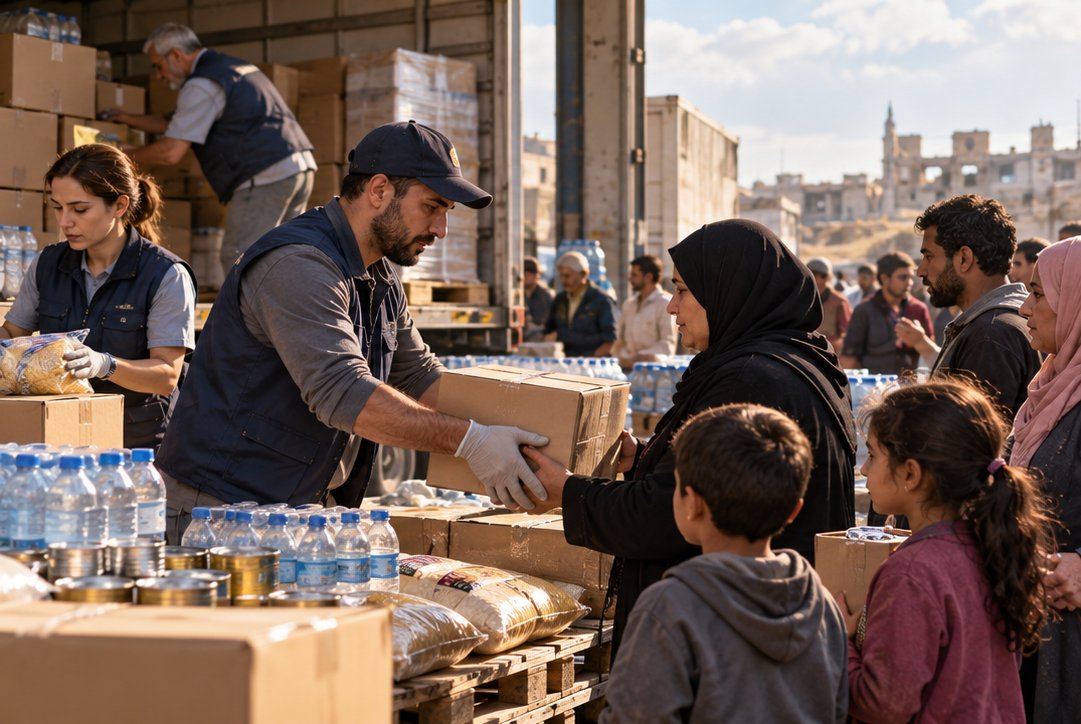
The UN Office of Internal Oversight Services examined allegations concerning 19 UNRWA personnel. Its findings, announced on 5 August 2024, differentiated between cases. Investigators found no supporting evidence in one case and insufficient evidence in nine others. In the remaining nine cases the evidence indicated that the employees may have participated in the attacks. UNRWA said their employment would be terminated. The finding should neither be minimized nor exaggerated: the United Nations considered the nine cases serious enough for dismissal, but did not announce a criminal conviction of every suspect. The investigation did not conclude that the entire organization took part in the attacks.
Additional United States investigative findings
In April 2025 the inspector general of the United States Agency for International Development published an investigative summary about preventing suspect workers from moving into other American-funded aid operations. Its office reported independent evidence connecting three current or former UNRWA workers to the October 7 attacks and affiliating 14 other current or former workers with Hamas. These are significant institutional findings, although a concise investigative summary does not provide the complete evidentiary record of each individual case. Figures drawn from different investigations cannot automatically be added together: people, time periods and definitions may overlap. The responsible question is what each investigation actually establishes.
Claims concerning buildings and tunnels
The Israel Defense Forces stated in February 2024 that soldiers discovered a Hamas intelligence tunnel running beneath UNRWA's headquarters in Gaza City. The IDF also reported weapons in rooms of the headquarters and alleged connections between building utilities and underground infrastructure. In July 2024 it described combat activity in a compound previously used by UNRWA. These are specific Israeli military accounts, which readers should be able to inspect at the original source. They are not equivalent to an independent finding that UNRWA leadership approved the tunnel or the presence of weapons. Determining knowledge and responsibility would require authenticated records, testimony, access to the site and a fair investigation.
What the independent neutrality review found
The UN commissioned a separate external review chaired by former French foreign minister Catherine Colonna. Its report in April 2024 was not the criminal or disciplinary investigation into the 7 October accusations. It examined screening, management, teaching materials, staff conduct and the neutrality of facilities. The reviewers described UNRWA's neutrality framework as comparatively developed, while recommending substantial improvements. They identified problems involving political statements by some staff, problematic educational material and politicized staff associations. A finding that safeguards exist is not proof that violations never occur; equally, documented shortcomings do not alone prove an institutional relationship with Hamas.
The International Court of Justice in 2025
On 22 October 2025 the International Court of Justice issued an advisory opinion on Israel's obligations concerning United Nations and humanitarian activities in the occupied Palestinian territory. Assessing the information before it, the court said it had insufficient evidence to conclude that UNRWA as an organization lacked neutrality or impartiality. It also found that Israel had not substantiated the contention that a substantial share of the agency's staff belonged to Hamas or other armed factions. The court expressly addressed the nine dismissed employees and concluded that their possible involvement was not enough to establish misconduct by the agency as a whole. This legal assessment does not exonerate every individual employee.
Israeli law and diplomatic conflict
In October 2024 the Knesset adopted laws restricting UNRWA operations and contact with Israeli officials; the central restrictions took effect in January 2025. Israel argued that security and alleged infiltration justified the measures. The United Nations and several humanitarian governments warned that the measures could obstruct aid and conflict with international obligations. Israel amended the framework again in December 2025, including measures concerning utility services and legal privileges. The disagreement is therefore not only factual but also legal and diplomatic: it concerns who may administer aid, how security screening works and the duties of states towards civilians.
The humanitarian stakes
Across Gaza many civilians have depended on UNRWA-supported services such as health clinics, shelter, sanitation and education. A September 2026 United Kingdom government assessment reported that approximately 11,000 UNRWA personnel in Gaza continued providing assistance despite restrictions on international staff and aid deliveries. Palestinians needing food or medical care are not responsible for the actions of individual employees, just as Israeli civilians and hostages are not responsible for policies made by organizations. Any reform must protect civilians while preventing armed groups from abusing humanitarian assets. Security, accountability and uninterrupted essential care should be treated as simultaneous demands, not mutually exclusive slogans.
Why numerical claims need caution
Public debate has featured striking estimates about how many UNRWA employees might have links to Hamas. Such figures require questions about definitions: does a reported link mean membership, sympathy, a family relationship, political activity, an intelligence lead or participation in violence? Who compiled the list and was each person given an opportunity to respond? What independent checks are available? UNRWA has disputed broad estimates attributed to Israeli intelligence and says it regularly shares staff lists with relevant authorities. Israel argues that its intelligence identifies wider infiltration. Until claims are tested, numerical estimates should be explicitly attributed rather than presented as established totals.
The role of journalists and documentary sources
Reuters helps establish the timeline of investigations, dismissals and legislation. CNN's account is useful precisely because it distinguishes the Israeli dossier from independently verified evidence. BBC reporting likewise presents the UN's findings with their qualifications. The Times of Israel supplies the Israeli domestic and legal perspective, while IDF publications present the military's own case. The United Nations and the International Court of Justice provide official investigative and legal findings. Wikipedia can help readers navigate background and references, but its changing entries should not replace primary records. None of these sources, read alone, tells the complete story.
What meaningful accountability would require
A credible oversight process would specify the allegations, preserve documents, permit independent examination and protect witnesses as well as innocent staff. Confirmed involvement in attacks should have employment and, where legally justified, criminal consequences. Allegations against humanitarian premises should be investigated with appropriate safety measures. At the same time, criticism of institutional procedures should not turn into a claim that every employee, refugee or aid recipient has a connection to Hamas. The reverse error is to dismiss all allegations as propaganda merely because some were not proved. Both mistakes prevent accountability.
A conclusion based on distinct findings
There is credible evidence of serious misconduct or possible militant affiliation involving a number of individuals who worked for UNRWA, including the nine cases identified by the UN and the additional findings reported by USAID's inspector general. Israel has issued detailed allegations about the use of UNRWA facilities and the scale of infiltration. Yet the evidence reviewed by the International Court of Justice did not establish that UNRWA as an institution was controlled by Hamas or systematically failed the legal test of impartiality. The appropriate conclusion is neither automatic institutional guilt nor blanket denial. The record supports rigorous independent scrutiny, clear attribution and protection for civilians.
Sources and documents
- UN / OIOS (5 Aug 2024)
- UN independent review (Apr 2024)
- International Court of Justice (22 Oct 2025)
- USAID OIG (14 Apr 2025)
- Israel Defense Forces (10 Feb 2024)
- Reuters (5 Aug 2024)
- CNN (30 Jan 2024)
- BBC News (5 Aug 2024)
- The Times of Israel (5 Aug 2024)
- Wikipedia (background)
- UK Government (Sept 2026)
- US Library of Congress (Jan 2026)